Booking choice: The Nakasu yatai night tour, ★ 4.8 (74). Check dates Compare the options below
Food is the reason many people come to Fukuoka. The city gave Japan its creamy pork-bone ramen and its favourite rice topping, mentaiko, and it is where the yatai tradition survives on a scale found nowhere else: around nine in ten of Japan's yatai are here. Eating well is easy and does not need to cost much, but it helps to know a few words and a few customs.
Below: the dishes to try and where, how to order Hakata ramen, the other local specialities, how many yatai there are and where to find them, the etiquette, whether a food tour is worth it, and what to buy and what to leave behind. For a day around the food, see one day in Fukuoka; for the nightlife district and where to stay near it, Hakata or Tenjin.
The quick answer
Must-eats in Fukuoka are Hakata ramen (thin noodles in a creamy tonkotsu pork-bone broth; choose your noodle firmness and order kaedama, a refill of noodles), mentaiko (cod roe cured in chilli, first sold in Nakasu in 1949), motsunabe (an offal hotpot with cabbage, chives and garlic), mizutaki (chicken in a milky broth), goma saba (raw mackerel in sesame and soy), soft Hakata udon, yakitori, Amaou strawberries in winter and spring, and umegae mochi in Dazaifu. Try several at the yatai: around 100 open-air stalls that open from about 6 pm in Nakasu, Tenjin and Nagahama. Seats are few, so order a drink and a dish, enjoy, and make room for the next guests. Many take cards or QR payments, but carry some cash, and expect stalls to close on rainy or stormy nights. The best souvenirs are mentaiko packed with ice, sweets such as Hiyoko and Hakata Torimon, Hakata ori textiles and a Hakata doll.
What is a must eat in Fukuoka?
Hakata ramen first, then mentaiko, motsunabe and mizutaki. Local guides call mizutaki, motsunabe and Hakata udon the city's three signature dishes, and with tonkotsu ramen and yakitori they make five.
Most of Fukuoka's classics are everyday food rather than special-occasion cooking, which means you can eat them at counters, stalls and small restaurants all over the city. The table below tells you what each dish is and where to try it; the sections after it explain the ones that need a little know-how. If you only have one evening, a yatai lets you taste two or three in a couple of hours, and the easiest way to find the right stalls is with a guide on the Nakasu yatai night tour.
| Dish | What it is | Where to try it |
|---|---|---|
| Hakata ramen | Thin, straight noodles in a creamy pork-bone (tonkotsu) broth | Ramen shops across Hakata, Canal City's ramen floor, yatai |
| Nagahama ramen | A lighter tonkotsu style from the old fish market district, served fast | Around Nagahama, near the fish market |
| Mentaiko | Cod roe cured in chilli, on rice, in rice balls or on pasta | Shops in Hakata Station and Nakasu, breakfast buffets, izakaya |
| Motsunabe | A hotpot of offal with cabbage, garlic chives and garlic, finished with noodles | Specialist restaurants in Hakata and Tenjin |
| Mizutaki | Chicken simmered in a milky broth, eaten with ponzu | Specialist restaurants, often booked ahead |
| Goma saba | Raw mackerel dressed with sesame and soy | Izakaya and seafood restaurants |
| Hakata udon | Soft, thick wheat noodles in a light broth, often topped with burdock tempura | Udon shops across the city, fast and simple |
| Yakitori | Grilled skewers, often including pork belly, served on cabbage | Yakitori bars and yatai |
| Amaou strawberries | Large, sweet strawberries grown only in Fukuoka Prefecture | Markets, department store food halls, desserts in winter and spring |
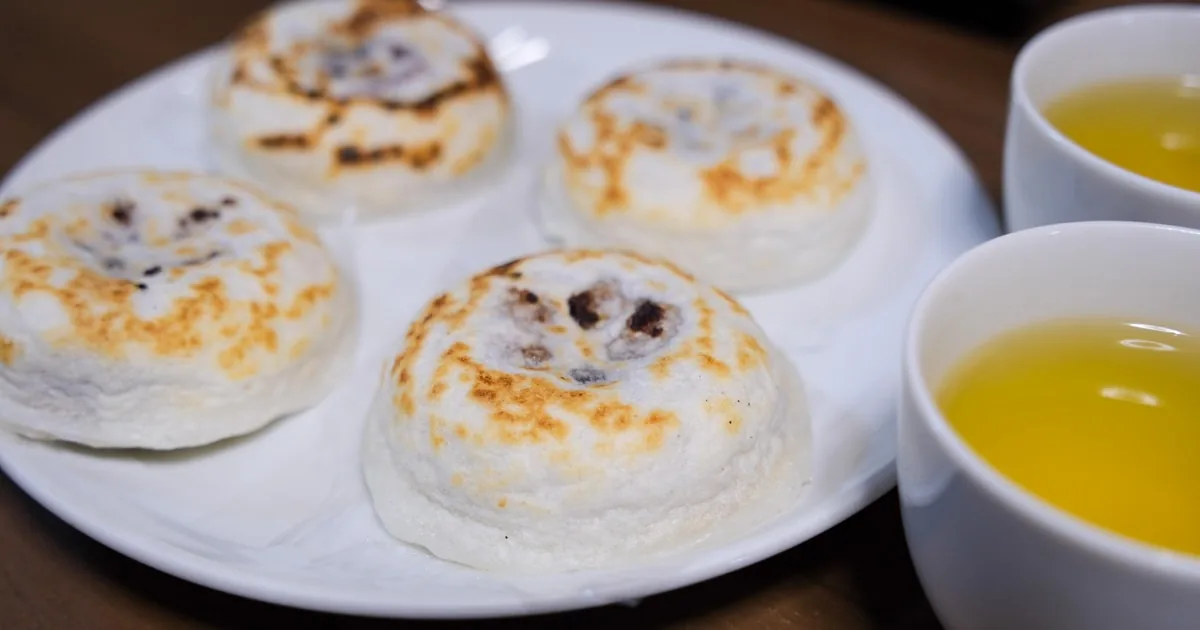
| Umegae mochi | A grilled rice cake with sweet red bean paste, stamped with a plum blossom | The shrine road in Dazaifu |
How do you order Hakata ramen?
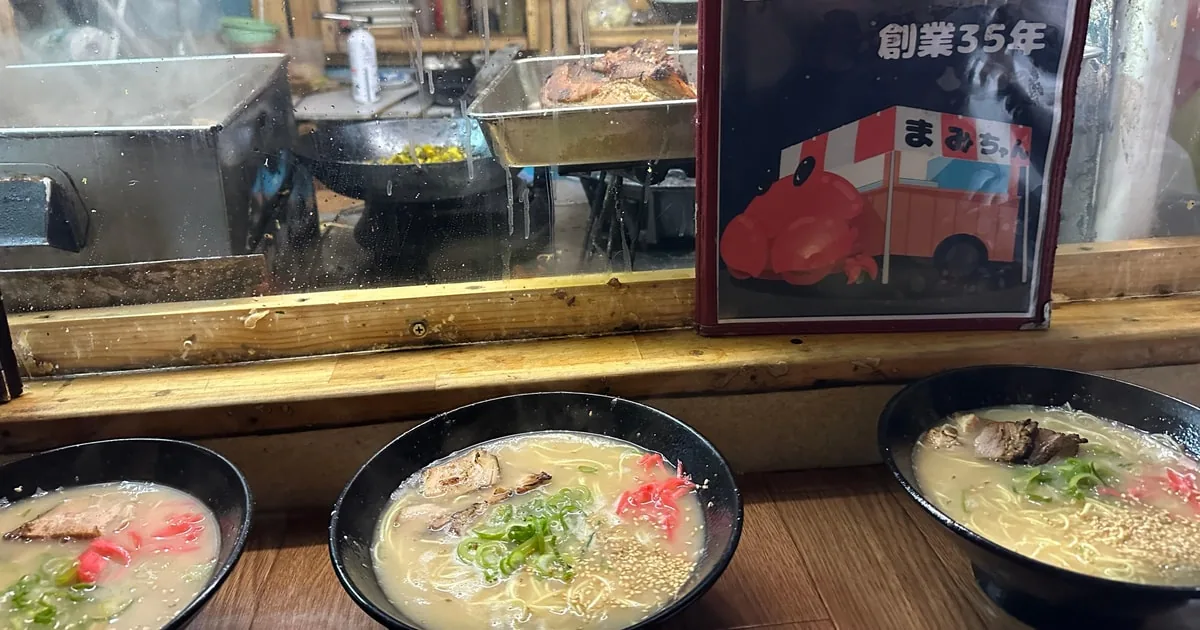
Choose your noodle firmness when you order, eat the noodles while they are firm, and ask for kaedama, a fresh refill of noodles, before you finish the soup. Many shops use a ticket machine or an order sheet.
In Hakata, you order your ramen noodle firmness and ask for kaedama, a fresh refill of noodles, when you finish the first serving. The firmness scale runs from barely cooked to soft; the words you will hear most are barikata (very firm), kata (firm), futsu (regular) and yawa (soft), with harigane and konaotoshi for people who like their noodles almost raw. If you are unsure, kata is a good start. The noodles are thin so that they cook in seconds, which is also why the bowls come quickly.
Kaedama is usually credited to the Nagahama district, near the fish market, where stalls served fast, hungry market workers, and the Nagahama style still comes with a lighter broth and quick service. On the table you will often find pickled ginger, sesame seeds, spicy mustard greens (karashi takana) and garlic to add yourself. The shops in Canal City and the stalls by the river are the easiest places to start; in one day in Fukuoka lunch is built around them.
Which other Fukuoka dishes are worth trying?
Mentaiko, the two hotpots (motsunabe and mizutaki), goma saba, Hakata udon and yakitori, plus Amaou strawberries in season and umegae mochi in Dazaifu. Each shows a different side of the city's food.
- Mentaiko: Kawahara Toshio, who grew up in Busan, created Japanese-style seasoned mentaiko and first sold it in 1949 at his shop Fukuya in Nakasu. It is now everywhere, from breakfast rice to cream pasta and baked baguettes.
- Motsunabe: an offal hotpot cooked at your table with cabbage, garlic chives and garlic, in a soy or miso broth. Finish with noodles in the leftover soup. It is at its best on a cool evening.
- Mizutaki: chicken simmered for hours into a milky broth; you drink a cup of the broth first, then eat the chicken and vegetables with ponzu, and finish with rice porridge.
- Goma saba: slices of raw mackerel in a sesame and soy dressing, a Fukuoka izakaya classic that shows how fresh the fish is here.
- Hakata udon: soft, thick noodles, unlike the firm udon of Kagawa. Jotenji in old Hakata has a monument that marks it as the birthplace, it is said, of udon and soba in Japan.
- Yakitori: in Hakata the skewers often include pork belly (butabara) and come on a bed of cabbage with a vinegar dressing.
- Amaou: big strawberries grown only in Fukuoka Prefecture; the name comes from the Japanese for red, round, big and tasty.
- Umegae mochi: Dazaifu's grilled rice cake, linked to the legend of an old woman who offered mochi to the exiled scholar Sugawara no Michizane. On the 25th of each month a green yomogi version is sold.
How many yatai are there in Fukuoka, and where?
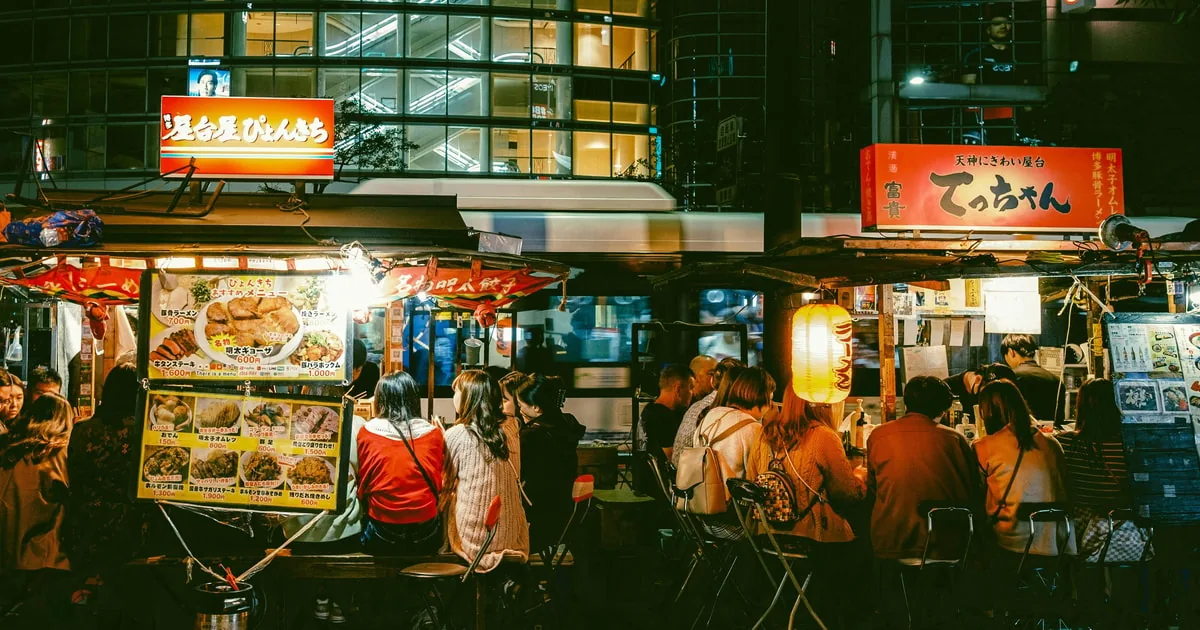
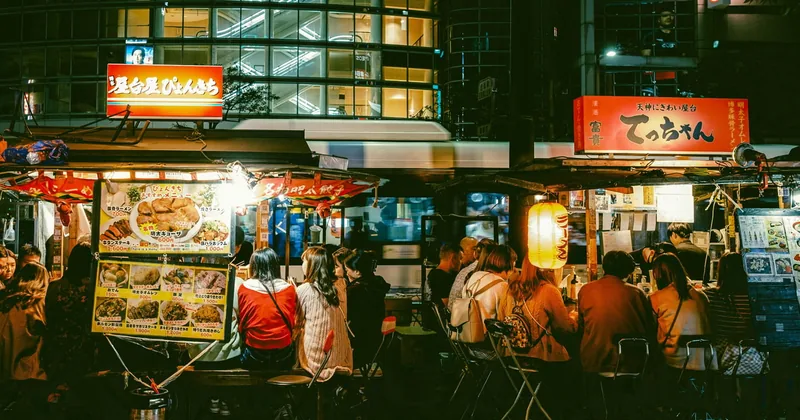
Around 100 yatai hold permits in Fukuoka, about nine in ten of all the yatai in Japan. They gather in three areas: along the Naka River in Nakasu, in Tenjin and around Nagahama.
Yatai are small open-air stalls on wheels, set up on the pavement every evening and removed before morning. The city regulates them closely: after years of decline, an ordinance in 2013 set the rules, and the city now recruits new operators through an open selection, which has brought younger owners and new styles of cooking alongside the old ramen and oden stalls. Around 1.19 million visits a year are estimated.
- Nakasu: the best-known row, along the Naka River bank facing the nightlife district. Atmospheric, with river views, and the busiest with visitors.
- Tenjin: the largest cluster, spread across several streets near the department stores. Good variety, from classic ramen to French-influenced dishes.
- Nagahama: near the fish market, revived in recent years by new operators.
Most open around 6 pm, some a little later, and they usually run late into the night; hours vary by stall. The city runs a LINE account, FUKUOKA GUIDE, with yatai information, and the official tourism site Yokanavi covers the areas in English.
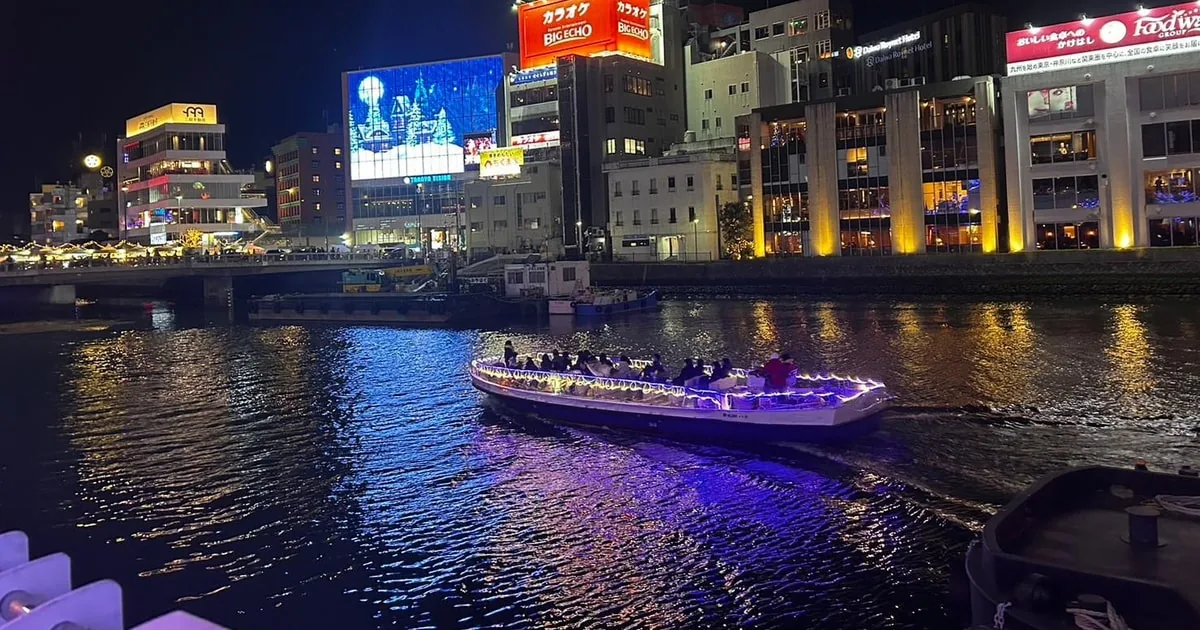
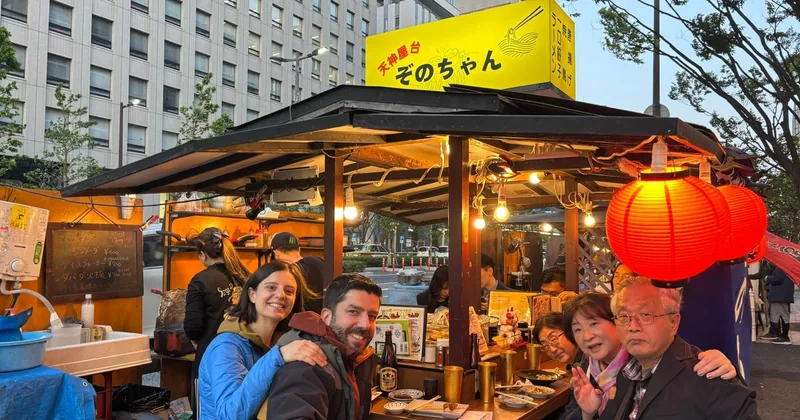
Two or three stalls with a private guide who orders for you, a food and drink allowance at each, and dishes such as oden, yakitori and ramen: rated 4.8 from 74 reviews.
Check dates for the Nakasu yatai night tourHow does yatai etiquette work?
Ask at the curtain how many seats there are, order a drink first and a quick dish while grilled food cooks, sit close together, and make room when others are waiting. Solo diners are welcome.
- At the curtain: say how many you are and ask if there is room. Seats are few, and groups larger than four may need to split.
- Sit toward the middle: benches and stools are small, so shuffle up and leave space at the ends.
- Order a drink and something quick: oden or a motsu stew arrives straight away; grilled skewers take longer.
- Keep it short when it is busy: a yatai is a place for a drink and a dish or two, then on to the next. Staying for hours while people wait is not the custom.
- Payment: over 30% of stalls take cards or QR payments and cash is accepted everywhere; ask when you sit down.
- Toilets: there are few near the stalls, so go before you sit down.
- Photos: ask the owner before you photograph the stall or other guests.
Rain and closures: many stalls close on rainy nights, in bad weather and when a typhoon approaches, and each takes a regular night off, often early in the week. On a wet evening, head to a ramen shop or an izakaya instead; guided yatai tours move indoors in heavy rain. What the weather does month by month is in the best time to visit.
A small group of up to three guests: a drink and a dish at a Tenjin yatai, then a flight of three locally brewed sakes where locals go, and a stroll along the lit riverside.
Check dates for the yatai night tour with sakeIs a yatai food tour worth it?
For your first night, often yes. Menus are short and often only in Japanese, seats are scarce and the customs are unwritten; a guide finds the seats, orders for you and teaches you enough to go back alone the next evening.
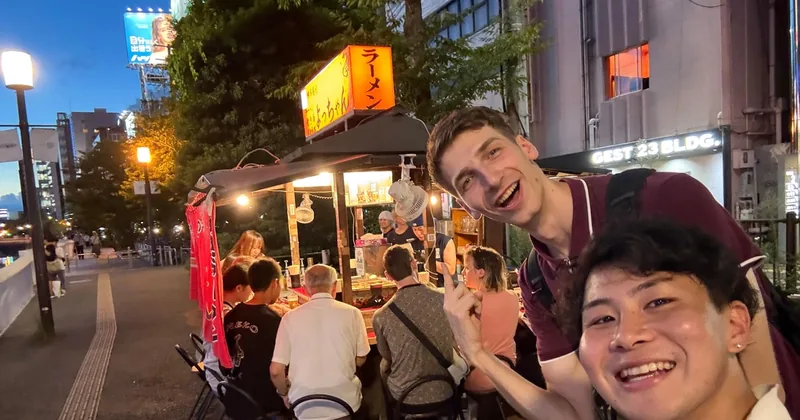
Three evening tours stand out, and they suit different people. The Nakasu yatai night tour (4.8 from 74 reviews, the most-reviewed tour inside the city) is private, two hours long, with two or sometimes three stalls and a food and drink allowance at each; guides include Morry, whose magic tricks while you queue are a reviewers' favourite. One guest wrote afterwards that he felt ready to go to a food stall on his own. The yatai tour with sake (5.0 from 15) takes up to three guests to a Tenjin stall for a drink and a local dish, then to a tasting of three Fukuoka sakes; bring cash. The yatai and izakaya night walk (5.0 from 11) is the all-inclusive one: a yatai, two izakaya and a dessert stop, 8 to 10 dishes and three drinks, and keepsake photos by a guide who is also a photographer.
If you are confident with a phrasebook and happy to point, you can do without: arrive early, pick a stall with an empty seat and a friendly owner, and order what the person next to you is eating. Yatai are an inexpensive way to eat, and a tour costs more than eating on your own; what you pay for is the confidence and the stories.
Eight to ten dishes and three drinks included, across a yatai, two izakaya and a dessert shop, for up to four guests, with keepsake photos.
Check dates for the yatai and izakaya night walkWhat is must buy in Fukuoka?
Mentaiko packed with ice, boxed sweets such as Hiyoko and Hakata Torimon, Hakata ori textiles and a hand-painted Hakata doll. Hakata Station's shops and department stores stock most of them.
- Mentaiko: the city's signature souvenir. Buy it last, and ask the shop to pack it with ice for the journey; it keeps only for a short time and must stay cold.
- Hiyoko: chick-shaped buns filled with sweet bean paste, made since 1912 and originally from Iizuka in the Chikuho area. A classic gift box.
- Hakata Torimon: a buttery pastry with white bean paste from Meigetsudo, founded in 1929, named after the parades of the Hakata Dontaku festival.
- Hakata ori: a dense woven silk with a pattern derived from Buddhist ritual tools, dating back to 1241. Today it is made into belts, purses, card cases and ties.
- Hakata ningyo: unglazed clay dolls, painted by hand, a craft traced back to artisans gathered around 1600. You can also paint one yourself.
- Food shops and markets: Yanagibashi Rengo Market, known as Hakata's kitchen, sells seafood and mentaiko in a covered street of about 100 m; most shops close on Sundays and holidays, so go on a weekday morning.
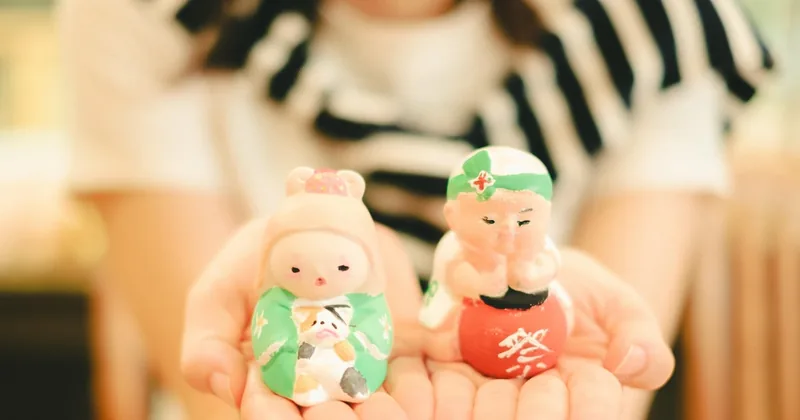
The Hakata doll workshop at Shogetsudo in Nakasu gives you an hour and a half to paint your own doll, a craft with about 400 years of history. The teacher speaks Japanese, with written steps in English and a finished sample to follow, and the studio is wheelchair accessible. Reviewers describe a relaxing break with tea, and a souvenir they painted themselves.
Explore the Hakata doll painting workshopWhat not to bring back from Japan?
Check your own country's customs rules before you buy food. Many countries restrict meat products and fresh fruit, which can include cured meats, some snacks and instant noodles with meat, and fresh strawberries.
Rules differ from country to country and change, so look at your home country's official customs or agriculture website before your flight and declare food when you are unsure. Packaged sweets such as Hiyoko or Hakata Torimon are usually the easiest souvenirs to carry. Mentaiko is perishable and needs to stay cold, so it suits a short trip home or a gift inside Japan better than a long-haul flight. Fresh Amaou strawberries are best enjoyed in Fukuoka.
Frequently asked questions
What is the best food to eat in Fukuoka?
If you eat one thing, make it Hakata ramen: a creamy pork-bone broth with thin noodles and a kaedama refill. Then mentaiko, and a hotpot, either motsunabe or mizutaki, on your second evening.
What is Fukuoka most famous for?
Food first: Hakata ramen, mentaiko and the yatai food stalls. Then the Hakata Gion Yamakasa festival in July, old Hakata's temples, and a compact, relaxed city where the airport is minutes from the centre.
What is the best souvenir to bring back from Japan, and the most bought?
The best souvenir is one tied to the place: from Fukuoka, Hakata ori, a Hakata doll or a box of local sweets. Boxed sweets and snacks are what most travellers buy in Japan, because they are easy to share and to carry; in Fukuoka that means Hiyoko, Hakata Torimon and mentaiko-flavoured snacks.
Are the yatai open when it rains?
Often not. Many stalls close on rainy nights, in bad weather and when a typhoon is near, and each takes a regular night off. Some stay open in light rain under their awnings. If the weather looks poor, have a ramen shop or izakaya as a plan B.
Ready to book
Choose your tour
Check your date and the live price on GetYourGuide; the refund terms are shown on each option.
Nakasu Yatai Food Stall Night Tour
- A private guide for your group, in English
- Visits to two or three yatai food stalls
- A food and drink allowance at each stall
Yatai Night Tour with Sake Tasting
A dish and a drink at a Tenjin yatai, then three Fukuoka sakes where locals go
All-Inclusive Yatai & Izakaya Night Walk
A yatai, two izakaya and a dessert stop, food and three drinks included, up to 4 guests