Booking choice: The customized Fukuoka tour, ★ 4.9 (35). Check dates Compare the options below
Fukuoka is small enough that visitors often underestimate it. The city centre fits into two days, but the city is also the gateway to Kyushu, and some of the best things to do are a train or bus ride away: the great shrine of Dazaifu, the canals of Yanagawa, the coast of Itoshima and the giant reclining Buddha of Nanzoin. Three days gives you the city at an easy pace plus one of those trips.
This guide answers how long to stay, then lays out three days, compares the day trips with realistic journey times, and covers the longer trips for a fourth day. It ends with the questions people ask when they are choosing between Fukuoka and Osaka. For a single day, see one day in Fukuoka; for where to base yourself, Hakata or Tenjin.
The quick answer
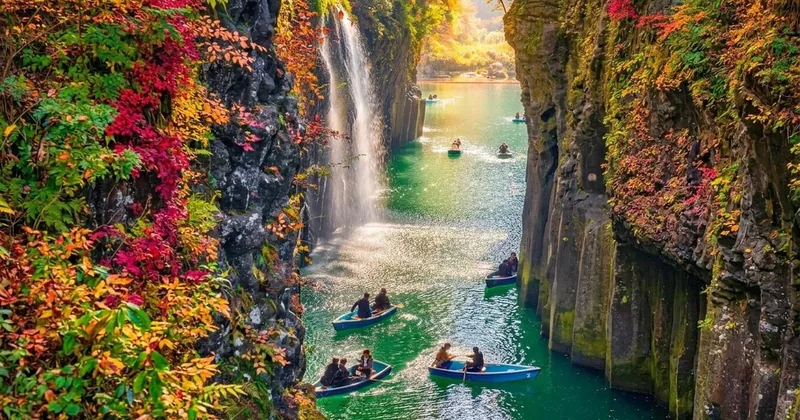
Plan two to three days for Fukuoka City. Day 1: the temples of old Hakata, Kushida Shrine, Canal City and a first yatai night in Nakasu. Day 2: Tenjin, the ACROS step garden, Ohori Park and the castle ruins, then the waterfront and Fukuoka Tower, or Nokonoshima island or Uminonakamichi park across the bay. Day 3: a day trip, ideally Dazaifu (about 30 minutes by Nishitetsu train from Tenjin) combined with the canal town of Yanagawa, or the coast of Itoshima, or Nanzoin. With a fourth day, take a coach trip to Takachiho Gorge or to Beppu and Yufuin. Fukuoka is also an easy stop between Osaka and the rest of Kyushu: the fastest shinkansen takes about 2.5 hours to Osaka.
How long to spend in Fukuoka City?
Two days cover the city; add a day for each trip to Dazaifu, Itoshima, Yanagawa or Beppu and Yufuin. Three days is the sweet spot for a first visit.
The city's sights are close together. Old Hakata, Nakasu and Tenjin are three subway stops apart, about five minutes, and Ohori Park is two stops further west. That makes one full day enough for the essentials and two days comfortable. What takes time are the trips out: Dazaifu fits into half a day, while Yanagawa, Itoshima, Beppu and Yufuin, Takachiho and Aso each take a full day.
- One day: old Hakata, Ohori Park or the tower, and the yatai. The timed route is in one day in Fukuoka.
- Two days: the city at an easy pace, with Tenjin, the bay and two yatai evenings.
- Three days: the city plus a day trip, usually Dazaifu.
- Four or five days: add Itoshima or Yanagawa and a long coach day to Takachiho, Aso or Beppu.
What should I do in Fukuoka for 3 days?
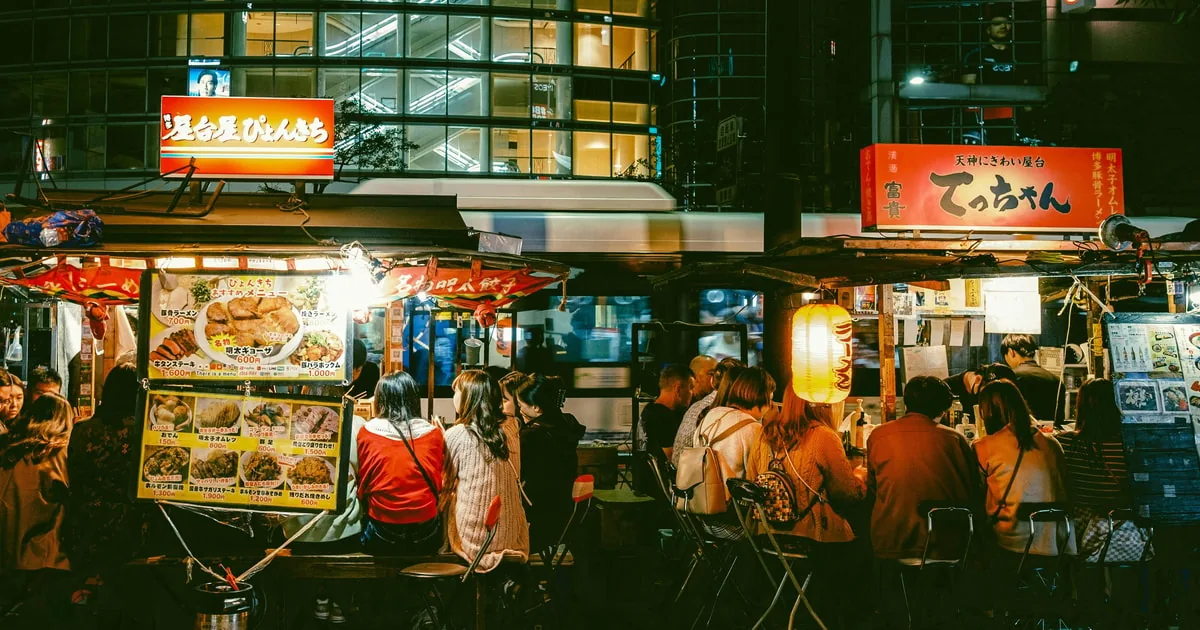
Spend the first day in old Hakata and at the yatai, the second in Tenjin, Ohori Park and on the bay, and the third on a day trip. Save your first evening for a guided yatai night so the second one is easy on your own.
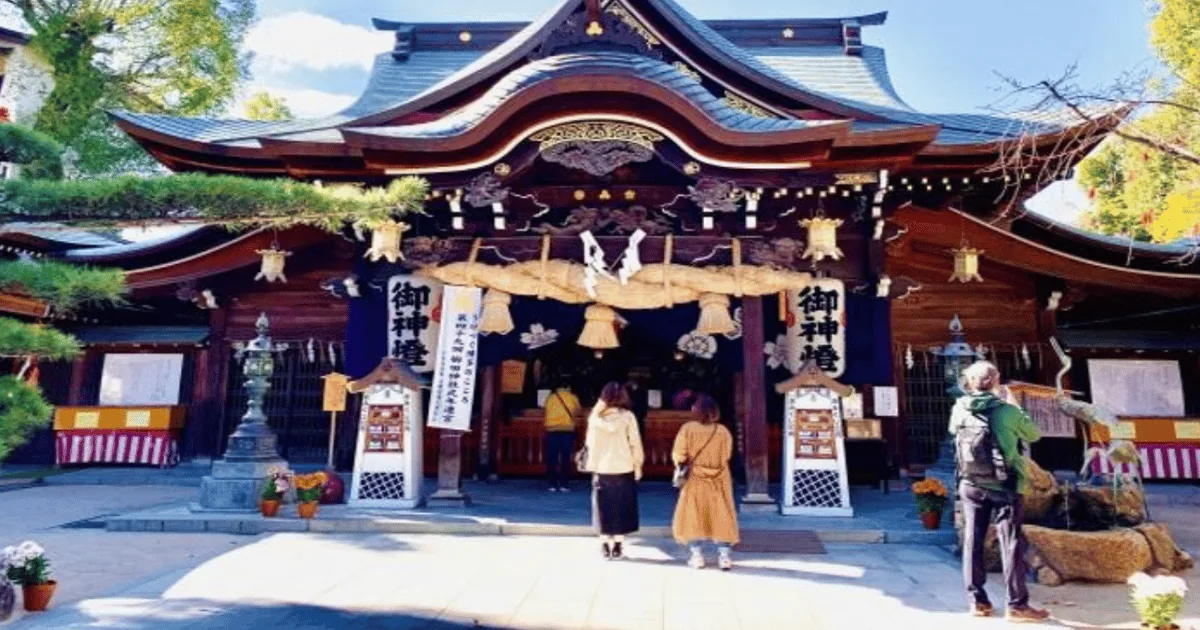
- Day 1, Hakata: Shofukuji, Tochoji, Jotenji and Kushida Shrine in the morning, Canal City and the Kawabata arcade after lunch, the riverside at Nakasu in the evening.
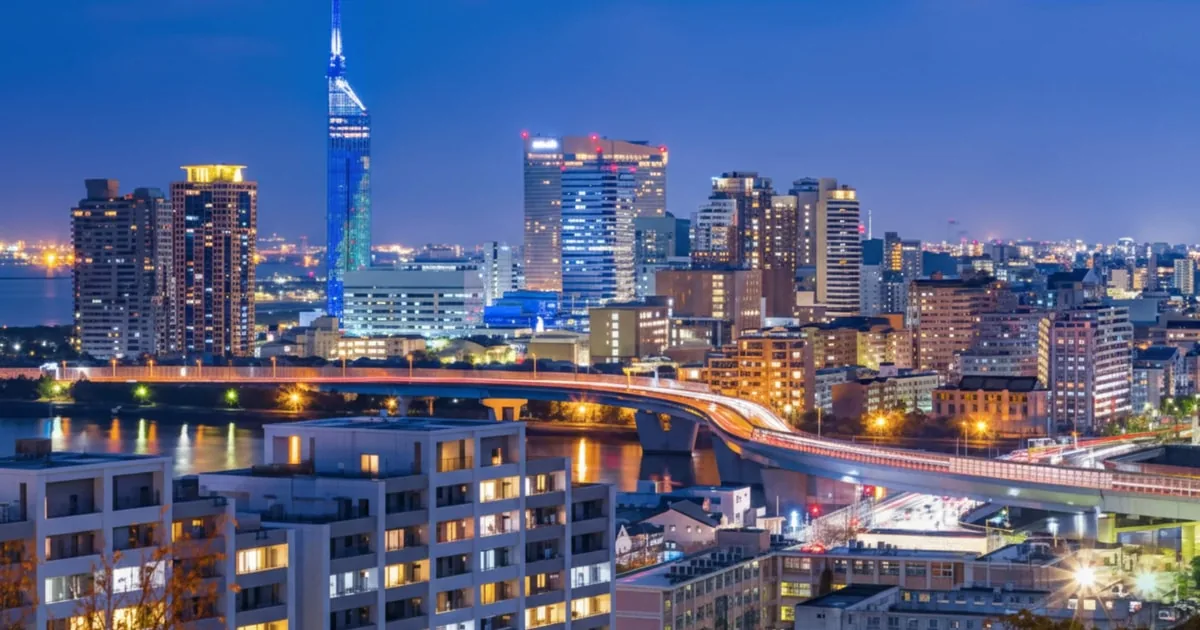
- Day 2, Tenjin and the bay: the ACROS step garden and Tenjin's shops, Ohori Park and the castle ruins, then Fukuoka Tower and Momochi beach, or an island afternoon on Nokonoshima.
- Day 3, out of town: Dazaifu Tenmangu and the Kyushu National Museum, with Yanagawa's canals in the afternoon if you start early; or Itoshima's coast; or Nanzoin in Sasaguri.
Base yourself near Hakata Station if you plan day trips by JR, or in Tenjin if you will take Nishitetsu trains to Dazaifu and Yanagawa. Both are an easy choice for a three-day stay.
Day 1: old Hakata, Nakasu and your first yatai
Walk the temple quarter between Hakata Station and the Naka River in the morning, Kushida Shrine and Canal City around midday, and end at the yatai by the river. Nothing on day 1 needs more than your feet.
Start early at Shofukuji, founded in 1195 and described as the first Zen temple in Japan, then walk through the Hakata Sennen-no-mon gate to Jotenji and Tochoji. Kushida Shrine, Hakata's guardian shrine, keeps a towering Yamakasa festival float on display most of the year, and the Hakata Machiya Folk Museum opposite shows how Hakata's merchants lived. After lunch, browse the Kawabata arcade and, if you like crafts, paint a Hakata doll at a workshop in Nakasu or visit Hakata Riverain's Asian Art Museum (closed Wednesdays).
From about 6 pm the yatai open along the Naka River. A guided first night means someone orders for you and explains the etiquette. For a private day planned with you, the customized tour with a local guide picks you up at your hotel and covers the temples of old Hakata on foot in two to six hours.
A local guide who plans the day with you and picks you up at your hotel: the temples of old Hakata, the machiya house and Kushida Shrine, for two to six hours.
Check dates for the customized Fukuoka tourDay 2: Tenjin, Ohori Park and the bay
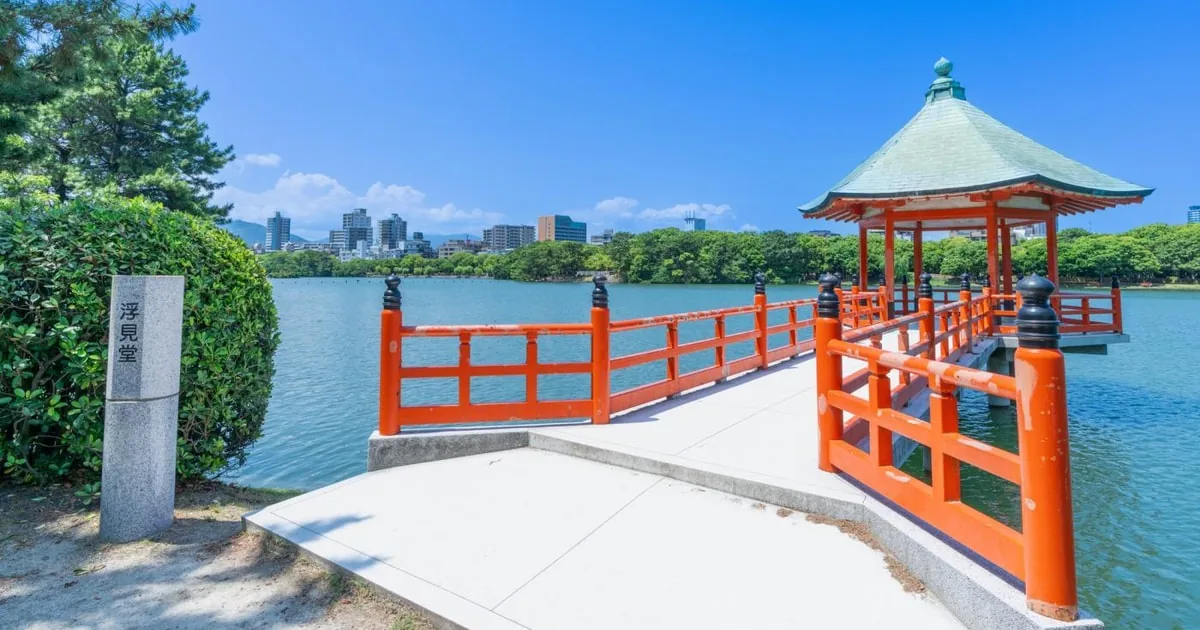
Spend the morning in Tenjin and at Ohori Park and the castle ruins, then choose the waterfront at Momochi with Fukuoka Tower, or a boat to Nokonoshima, or the seaside park at Uminonakamichi.
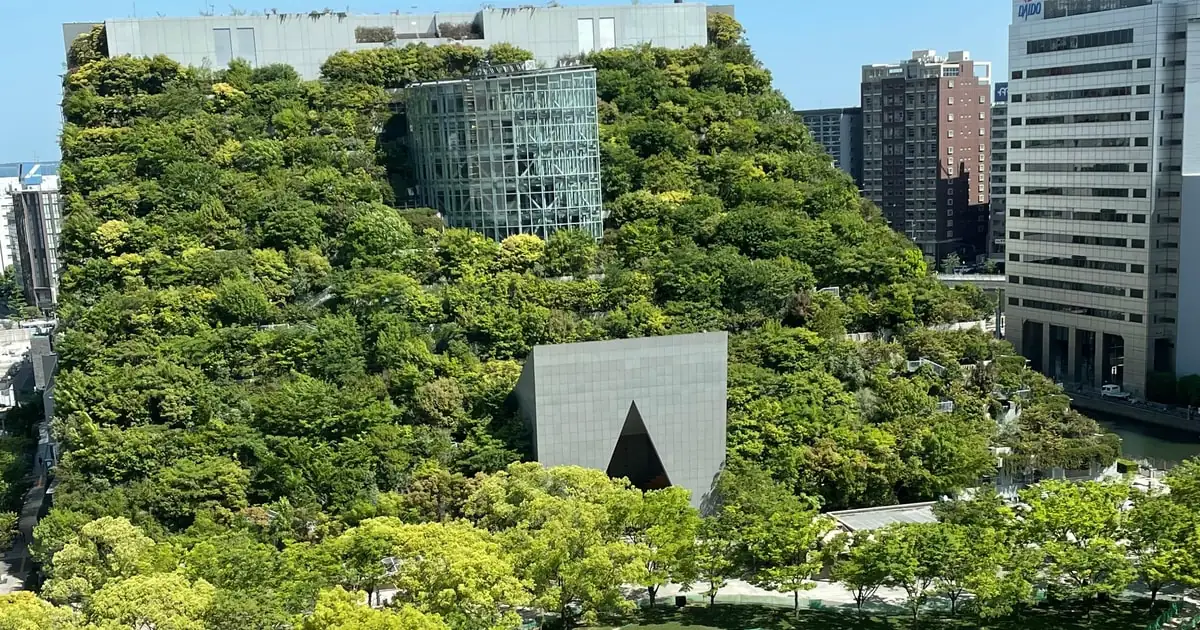
Tenjin, once part of the castle town, is the shopping hub, with department stores along the main street, the Tenjin underground mall below it and ACROS Fukuoka's step garden, a terraced green facade you can climb on foot, beside Tenjin Central Park. Two subway stops west, Ohori Park's lake path runs about 2 km around, and the stone walls of the Fukuoka Castle ruins rise right beside it. In the afternoon you have three good options:
- Momochi and Fukuoka Tower: the 234 m tower on the waterfront, with a deck at 123 m, and the artificial beach of Momochi Seaside Park below it. Best at sunset.
- Nokonoshima: an island in Hakata Bay, about 10 minutes by ferry from the Meinohama area, with a large flower park on the hillside above the sea.
- Uminonakamichi Seaside Park: a national park on the long sandbar across the bay, with flower fields, a zoo and the Marine World aquarium alongside. Reached by JR train or by boat across the bay.
For a guided version of this day, the private day with a licensed guide covers Ohori Park, the castle ruins, the Japanese garden and Fukuoka Tower in four hours, or adds Dazaifu by public transport on the six-hour option.
Day 3: which day trip from Fukuoka?
Dazaifu is the classic choice: the great shrine is about 30 minutes from Tenjin by Nishitetsu train. Yanagawa's canals, the coast of Itoshima and Nanzoin's reclining Buddha are the other easy trips.
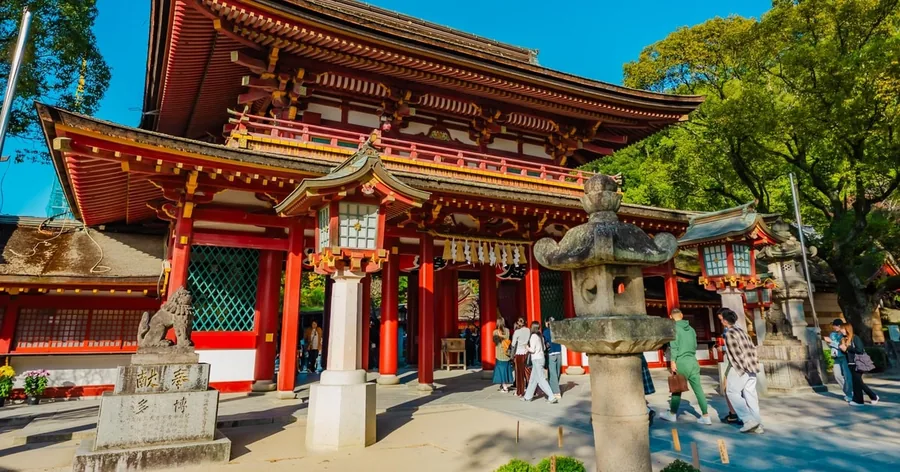
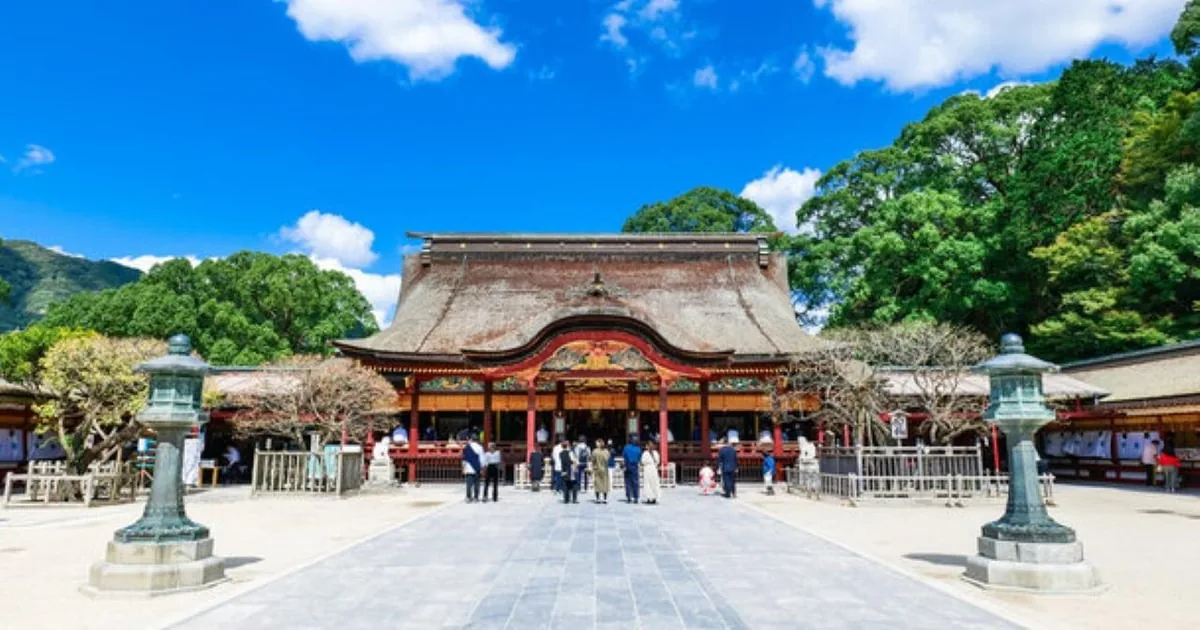
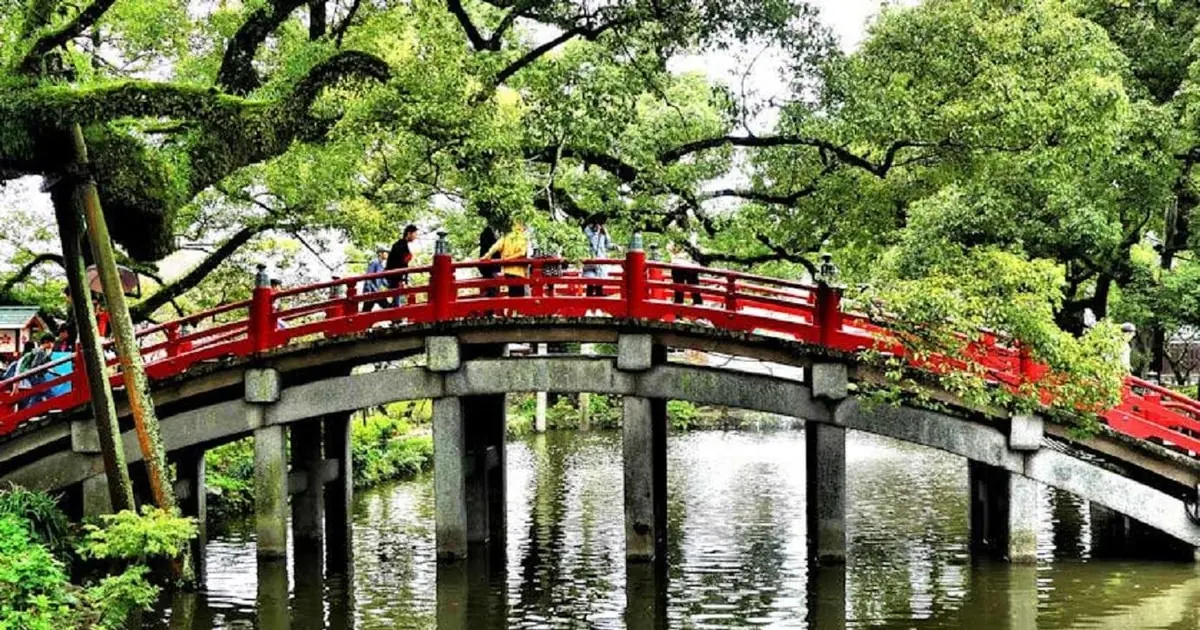
Dazaifu is a shrine town built around Dazaifu Tenmangu, dedicated to the scholar Sugawara no Michizane. The main hall reopened in 2026 after its first major restoration in 124 years, and the temporary hall used during the works is gone. Take a Nishitetsu train from Tenjin, with a change at Futsukaichi, or a bus from Hakata Bus Terminal, about 40 minutes. Try umegae mochi on the shrine road, then walk through the tunnel and escalator to the Kyushu National Museum. Yanagawa is further down the same Nishitetsu line: boatmen pole you along the canals for about 70 minutes, and in winter the boats have heated kotatsu tables. Doing both in one day works if you start early.
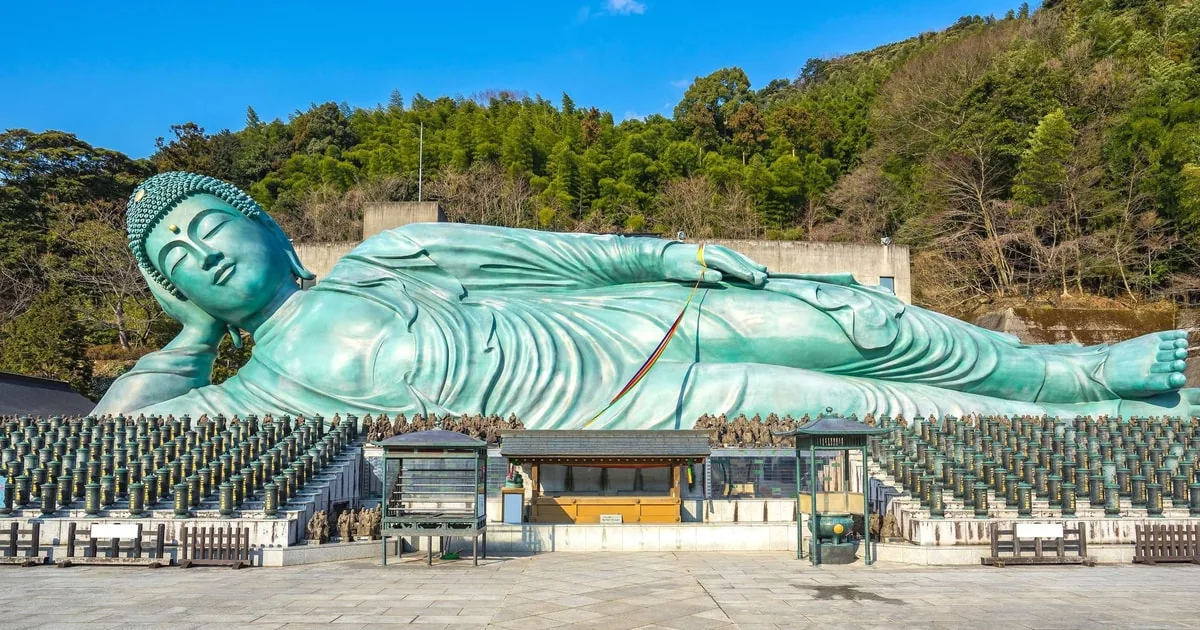
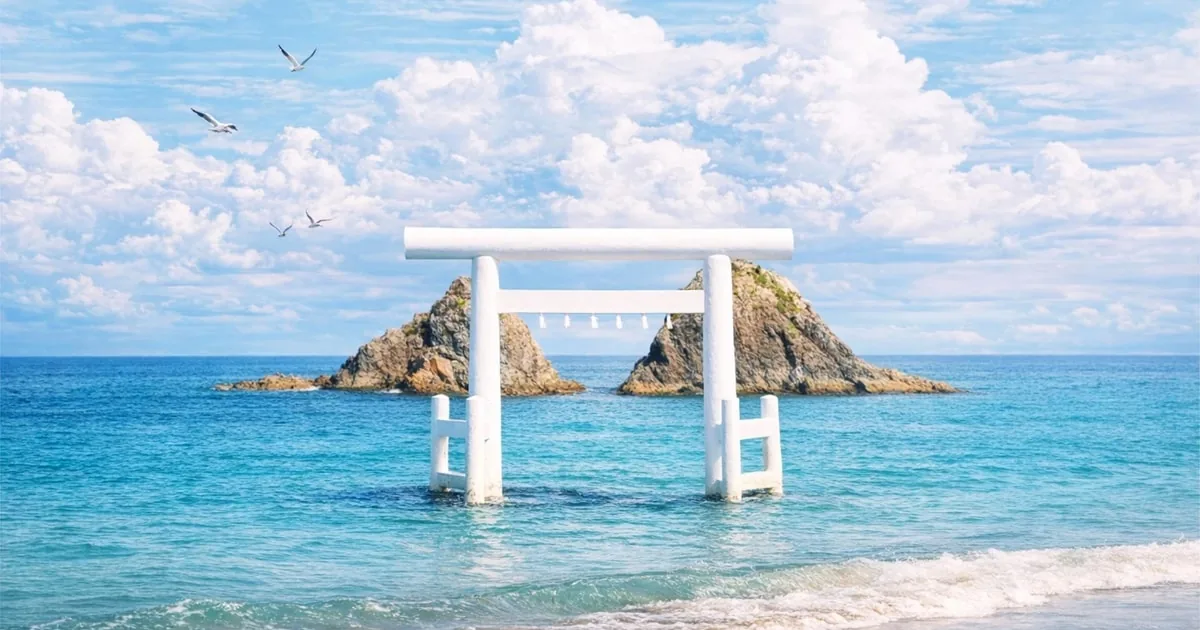
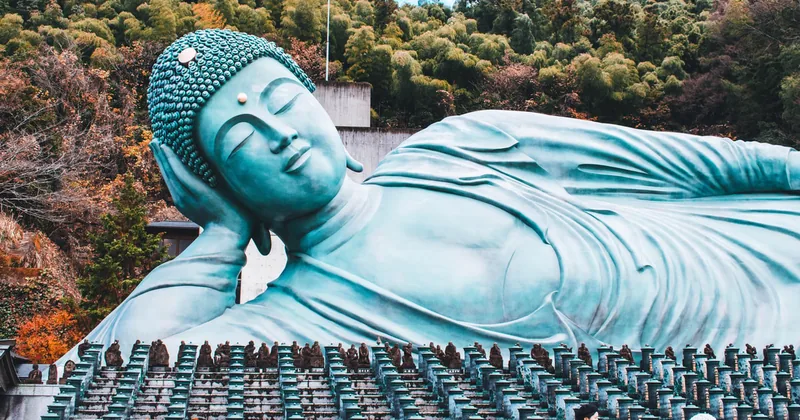
Itoshima, west of the city, is about the coast: the Meoto Iwa rocks with a white torii in the sea, beaches and cafes, and Shiraito Falls inland. Nanzoin in Sasaguri is about 25 minutes from Hakata on the JR Sasaguri Line, then a short walk; its bronze reclining Buddha is, the temple says, the largest of its kind in the world. More quiet trips are in Fukuoka hidden gems.
| Trip | Time from Fukuoka | Best for |
|---|---|---|
| Dazaifu | About 30 minutes by Nishitetsu train from Tenjin; about 40 by bus from Hakata | The great shrine, umegae mochi, the Kyushu National Museum; a half day |
| Dazaifu and Yanagawa | Roughly an hour from Tenjin to Yanagawa on the same Nishitetsu line | Shrine in the morning, a canal boat ride in the afternoon; a full day |
| Itoshima | About an hour by bus from Hakata or Tenjin to Futamigaura | The Meoto Iwa rocks, beaches, cafes, Shiraito Falls; a full day, easiest by car |
| Nanzoin (Sasaguri) | About 25 minutes by JR train from Hakata, then a 5-minute walk | The giant bronze reclining Buddha; half a day |
| Mojiko Retro (Kitakyushu) | Around an hour by shinkansen to Kokura and a local train | A harbour town of early 20th-century buildings; half a day or more |
| Beppu and Yufuin | About 2 hours by JR limited express to Beppu; a full day by coach tour | Hot-spring 'hells' and a relaxed onsen town; a full day |
| Takachiho Gorge | About 3 hours each way by coach | A basalt gorge, waterfall and rowing boats; a long full day |
| Aso | About 2 hours by car; longer by train via Kumamoto | The caldera and Kusasenri grasslands; the crater area is closed for now |
What if you have four days or more?
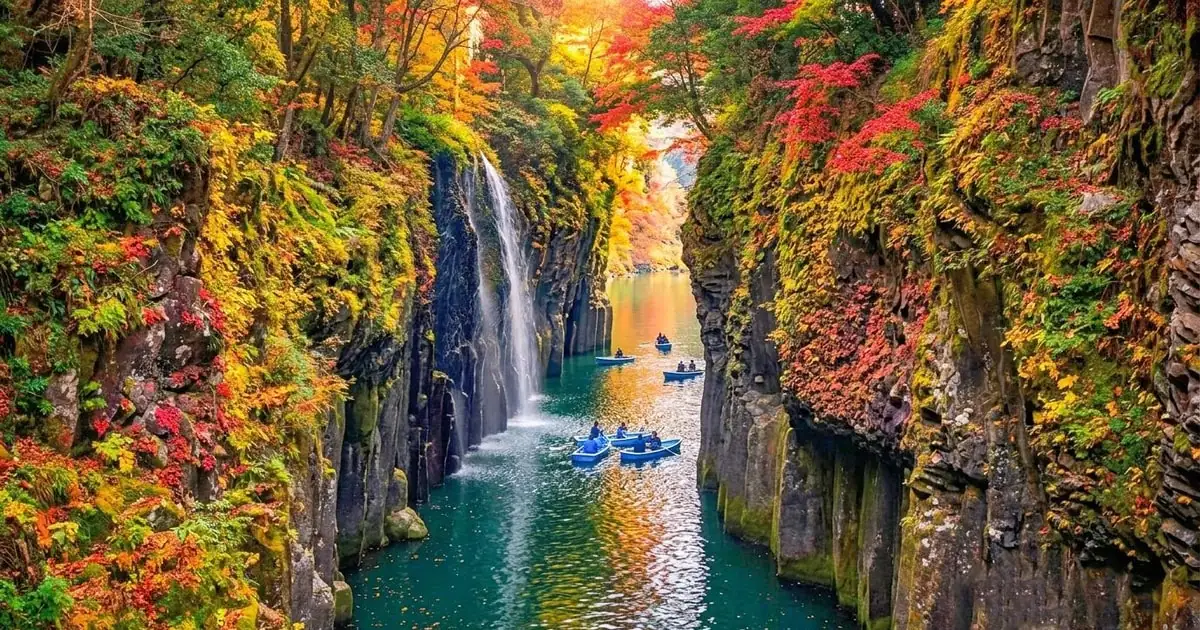
Use the extra day for a long coach trip: Takachiho Gorge is the most-booked tour starting in Fukuoka, and Beppu's hot-spring 'hells' with Yufuin is the other favourite. Aso's grasslands are open, but the crater area is closed for now.
Kyushu's big landscapes are far from public transport, which is why the Fukuoka tours with hundreds of reviews are coach day trips. The Takachiho Gorge day trip (4.8 from 738 reviews) spends about three hours each way on the road for the gorge and Manai Falls, an optional rowing boat (book the option ahead; boats sell out), the open-air Amaterasu Railway and a cave shrine. The railway ticket and food are extra, and reviewers are split on the railway, so treat it as a bonus.
For Aso, check what a tour actually promises: the Nakadake crater area is closed for now, but Aso's grasslands and caldera views are open to everyone. Beppu is also reachable by train in about two hours, if you prefer to go at your own pace and stay the night in a hot-spring town.
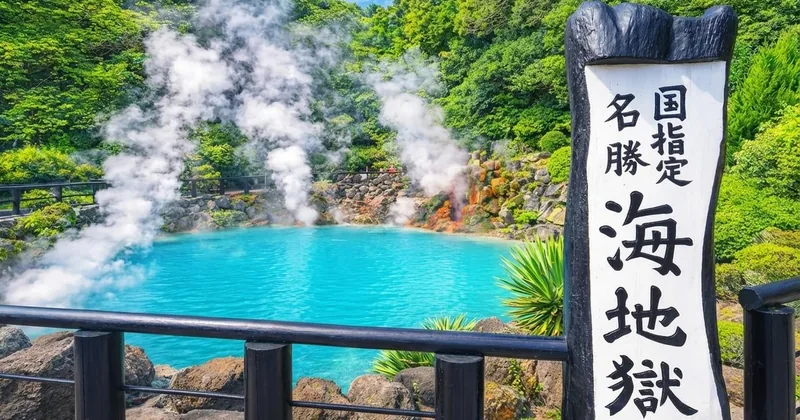
The Beppu day trip takes you by coach to two of Beppu's steaming hot-spring 'hells', Umi Jigoku and Kamado Jigoku, with admission included, then to the shops and lanes of Yufuin and Nyoirinji, a temple full of frog statues. One reviewer found the time at the hot springs a little short; the day covers a lot of ground without driving yourself.
Explore the Beppu and Yufuin day tripIs Osaka or Fukuoka better?
Neither: they suit different trips. Osaka is larger, busier and close to Kyoto and Nara; Fukuoka is smaller, calmer and walkable, with the yatai, an airport minutes from the centre and the rest of Kyushu on its doorstep.
Osaka is the bigger city by far, with a famously lively food and nightlife scene, big-name sights and easy day trips to Kyoto, Nara and Kobe. Fukuoka, Japan's fifth-largest city with about 1.6 million people, feels more relaxed: Hakata and Tenjin are five minutes apart, the sea is never far away, and around nine in ten of Japan's yatai food stalls are here. Its airport is one of the most central in Japan, while Osaka's Kansai Airport lies far out on the bay.
For a first trip to Japan, Osaka usually fits more easily into a Tokyo and Kyoto route. For a second trip, or as the start of a Kyushu journey with Dazaifu, Beppu, Aso and Takachiho, Fukuoka is the better base. Many travellers do both, with the shinkansen in between. The food side of that comparison is in what to eat in Fukuoka.
A day in Fukuoka shaped around you: a licensed guide for four or six hours, from Ohori Park and the castle ruins to Fukuoka Tower and, on the long option, Dazaifu.
Check dates for the private day with a licensed guideHow long is the bullet train from Fukuoka to Osaka?
About 2.5 hours on the fastest Nozomi from Hakata to Shin-Osaka. Mizuho and Sakura trains also run direct between Kyushu and Shin-Osaka, and Tokyo is about 5 hours by direct Nozomi.
All shinkansen leave from Hakata Station, which is why many visitors on a rail route stay in Hakata. The line runs east to Hiroshima, Osaka and on to Tokyo, and south to Kumamoto and Kagoshima. Mizuho and Sakura trains stop at fewer stations than the others and connect Kyushu directly with Shin-Osaka; check whether your rail pass covers the train you plan to take.
For Tokyo, most people fly: Tokyo to Fukuoka is about 110 minutes in the air, mostly from Haneda, and the subway gets you from Fukuoka Airport to Hakata Station in about five minutes. That short link from plane to city is one reason Fukuoka is easy to add to a Japan trip.
Frequently asked questions
Is Fukuoka closer to Tokyo or Osaka?
Osaka. In a straight line Osaka is about 486 km away and Tokyo about 880 km, and by shinkansen the gap is about 2.5 hours against about 5. Fukuoka is closer to Seoul, about 540 km, than to Tokyo, and Busan in South Korea is only about 200 km away.
Why is Fukuoka so famous?
For Hakata tonkotsu ramen, mentaiko and the yatai food stalls, for the Hakata Gion Yamakasa festival in July, and as an easygoing, compact city with an airport minutes from the centre. It is also the historic gateway between Japan and mainland Asia: the port of Hakata traded with China and Korea for centuries.
Can I take a ferry from Fukuoka to Busan?
Yes, but plan for a long crossing. The Queen Beetle fast ferry no longer runs. The New Camellia ferry sails between Hakata and Busan in about six hours, with an overnight crossing in the other direction.
Do I need a rail pass for three days in Fukuoka?
Usually not. The subway, Nishitetsu trains and buses cover the city, Dazaifu and Yanagawa, and several one-day passes exist for them, including the Fukuoka Tourist City Pass and a Dazaifu sightseeing ticket. A JR Kyushu Rail Pass starts to pay off only if you add longer trips such as Beppu or Kumamoto.
Ready to book
Choose your tour
Check your date and the live price on GetYourGuide; the refund terms are shown on each option.
Customized Fukuoka Tour with a Local
Temples, markets and ramen on foot; the longer option can add Nanzoin's reclining Buddha
Private Day with a Licensed Guide
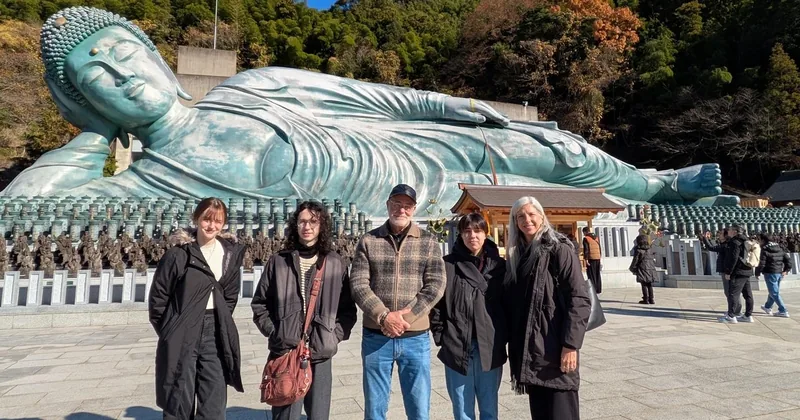
Ohori Park, the castle ruins, Fukuoka Tower and, on the long option, Dazaifu