Booking choice: The Fukuoka Essentials walk, ★ 4.9 (48). Check dates Compare the options below
Fukuoka is one of the easiest big cities in Japan to see in a day. Hakata Station, the temple district, Nakasu island and Tenjin sit close together, and one subway line, the Airport Line, links them with Ohori Park further west. The distances are short enough that a day here feels unhurried: you walk for most of the morning, ride the subway for a few minutes in the afternoon, and end up at a food stall by the river in the evening.
This guide gives you a timed route with the stops, the walks between them and where to take the subway, then two ways to spend the afternoon, the evening at the yatai, the things first-timers miss, a plan for rainy days and cruise-ship calls, and when a guide is worth booking. If you have more time, see Fukuoka in three days; for the food, what to eat in Fukuoka.
The quick answer
Start at 8:30 at Shofukuji, Japan's first Zen temple, about 10 minutes on foot from Hakata Station. Walk on through the Hakata Sennen-no-mon gate to Jotenji and Tochoji, with its red pagoda and great wooden Buddha, then to Kushida Shrine, Hakata's guardian shrine, by about 10:30. Have a ramen lunch at Canal City and watch a fountain show, then stroll up the covered Kawabata arcade to Nakasu-Kawabata Station. After lunch, take the Airport Line to Ohorikoen for a walk around the lake and up to the Fukuoka Castle ruins, or head to the waterfront for Fukuoka Tower. From about 6 pm, eat at the yatai in Nakasu or Tenjin. The whole day works on foot and by subway, and no ticket is needed for the temple grounds, the shrine, the park or the castle ruins.
What can I do in Fukuoka in one day?
Old Hakata's temples and Kushida Shrine in the morning, lunch around Canal City, Ohori Park and the castle ruins (or Fukuoka Tower) in the afternoon, and the yatai food stalls in the evening. The table below times it.
The route runs from east to west and back to the river. The morning is on foot in the old merchant town of Hakata, where temples, lanes and the shrine are all within about 15 minutes of each other. After lunch you ride the Airport Line three stops to Ohori Park, which leaves you close to the castle ruins, and in the evening you come back to Nakasu or Tenjin for the yatai. The times are a comfortable pace with stops for photos and coffee; move them an hour later if you are not an early riser.
A few days of the week change the plan slightly: the rebuilt Shiomi turret at the castle is closed on Mondays, the Fukuoka Asian Art Museum on Wednesdays, and yatai rest on different nights and stay closed in heavy rain. The same route in a relaxed version, with photos, is on the homepage walk.
| Time | Stop | How to get there |
|---|---|---|
| 8:30 | Shofukuji, Japan's first Zen temple | About 10 minutes on foot from Hakata Station, or 5 from Gion Station |
| 9:15 | Hakata Sennen-no-mon gate, Jotenji and Tochoji | A few minutes on foot through the temple lanes |
| 10:30 | Kushida Shrine and the Hakata Machiya Folk Museum | About 10 minutes on foot from Tochoji |
| 11:45 | Canal City Hakata: fountain show and a ramen lunch | About 5 minutes on foot from the shrine |
| 13:15 | Kawabata arcade to Nakasu-Kawabata Station | About 10 minutes on foot through the covered street |
| 13:45 | Ohori Park: the lake path and the Japanese garden | Airport Line to Ohorikoen, three stops |
| 15:00 | Fukuoka Castle ruins and the Shiomi turret | About 5 to 10 minutes on foot from the lake |
| 16:30 | Optional: Fukuoka Tower and Momochi beach at sunset | A Nishitetsu bus, or about 20 minutes on foot from Tojinmachi Station |
| 18:30 | Yatai in Nakasu or Tenjin | Airport Line back to Nakasu-Kawabata or Tenjin |
Where should a day in Fukuoka start?
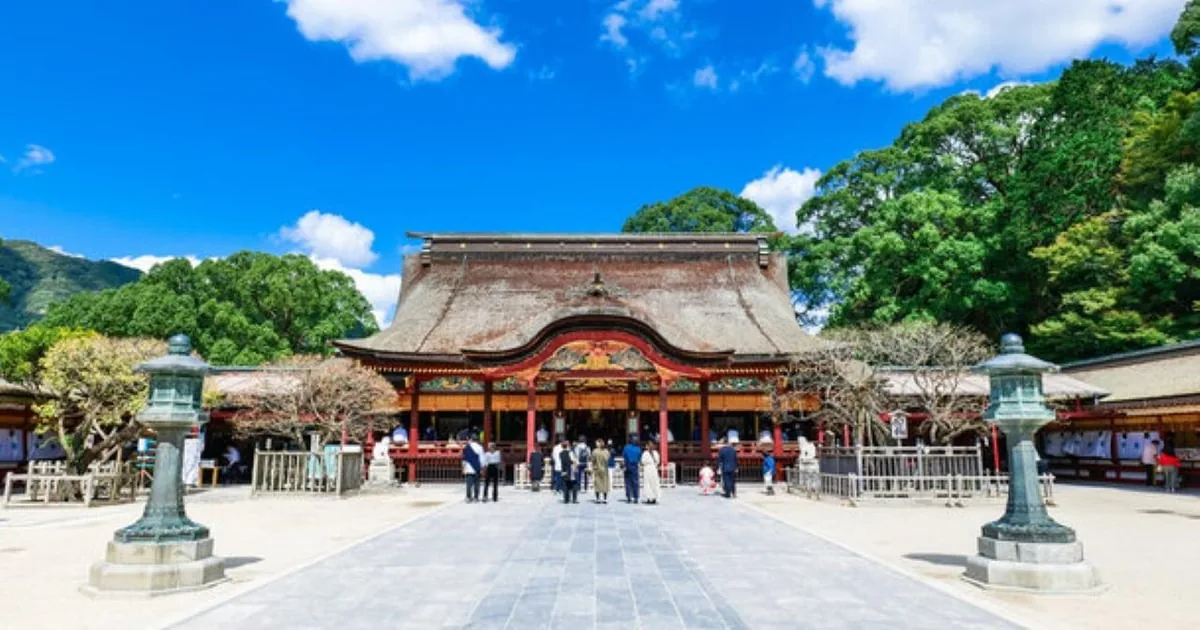
In the temple quarter of old Hakata, just north-west of Hakata Station, as early as you can. The lanes are calm before 10 am, and three of the city's great temples stand within a few minutes of each other.
- Shofukuji: founded in 1195 by the monk Eisai and described as the first Zen temple in Japan. Eisai is also credited with bringing tea seeds back from China. The halls are generally closed to visitors, so the visit is a walk through the gates, stone paths and trees of the grounds.
- Hakata Sennen-no-mon: a wooden gate completed in 2014 as the entrance to Hakata Old Town, built with camphor wood from Dazaifu Tenmangu. It makes a good photo stop between the temples.
- Jotenji: founded in 1242 by the monk Enni after his return from China. Stone monuments in its grounds mark it as the birthplace, it is said, of udon, soba and manju in Japan.
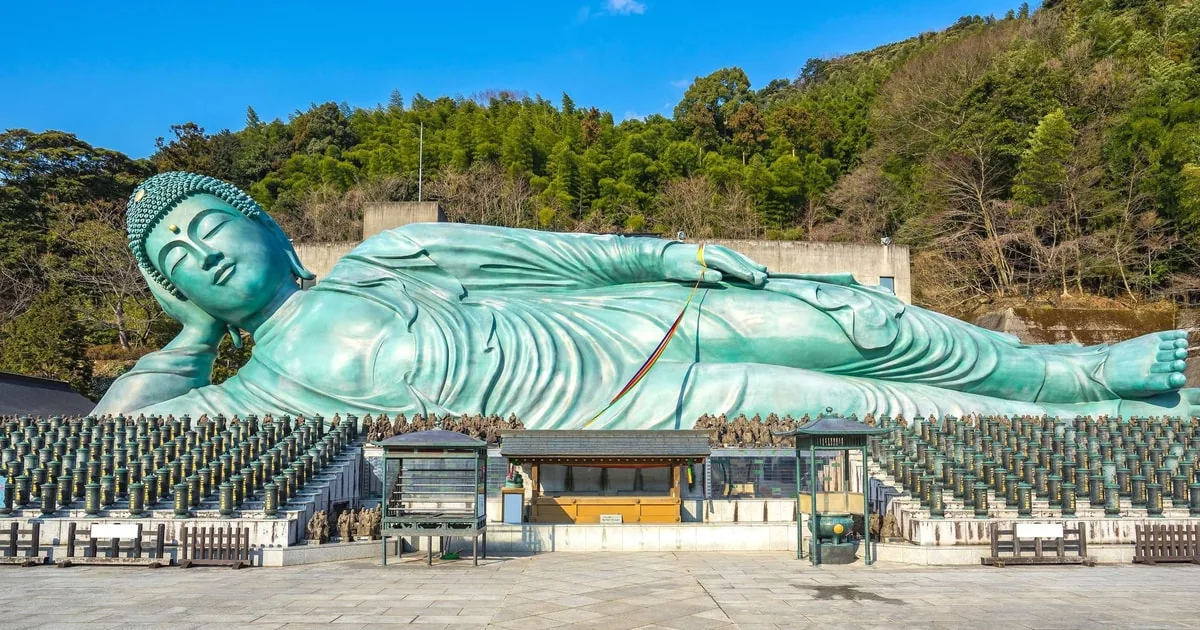
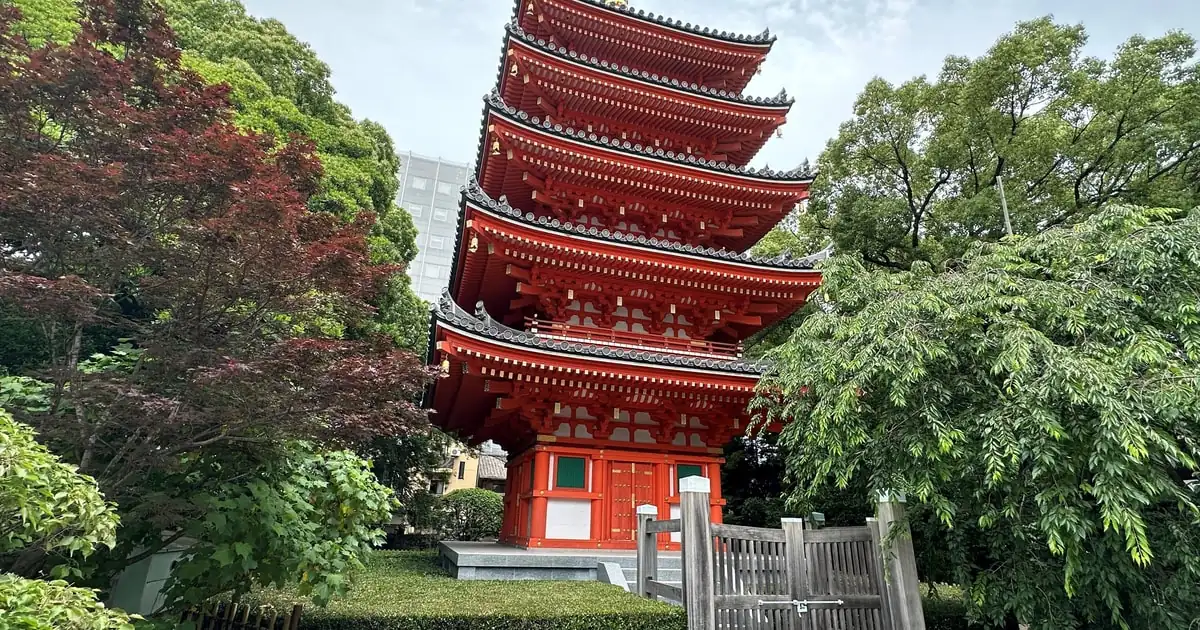
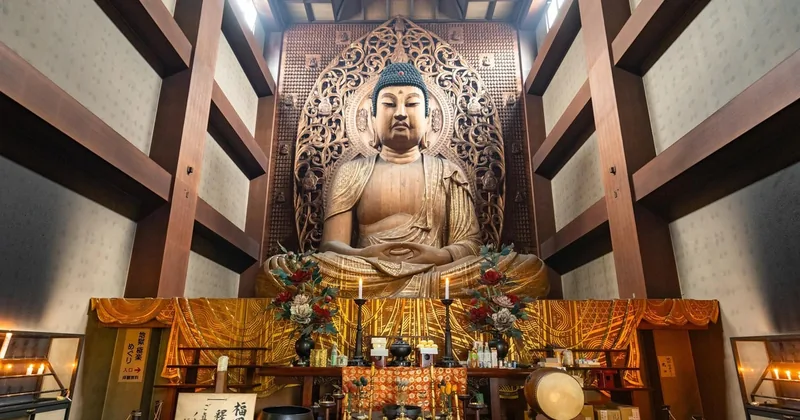
- Tochoji: a Shingon temple said to date from 806, with a red five-storey pagoda and one of the largest seated wooden Buddhas in Japan, said to be about 10.8 m tall. A dark corridor beneath it represents hell and paradise.
Gion Station on the Airport Line is the nearest stop if you are not starting from Hakata Station. Wear shoes you can take off easily: some temple halls ask you to remove them.
What is a must do in Fukuoka?
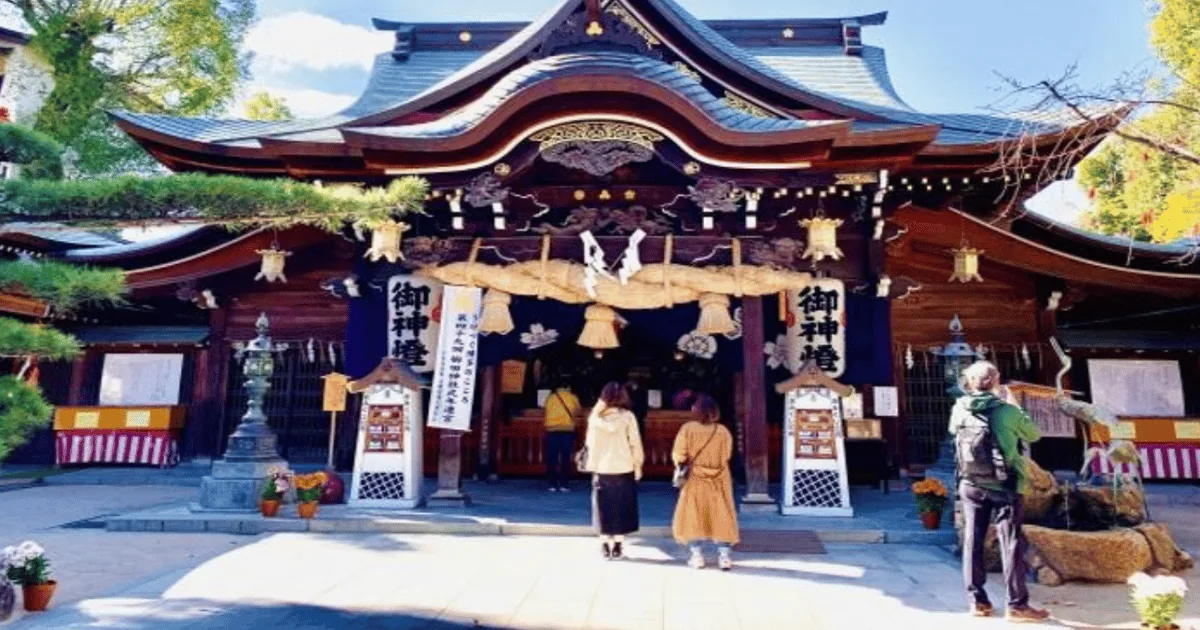
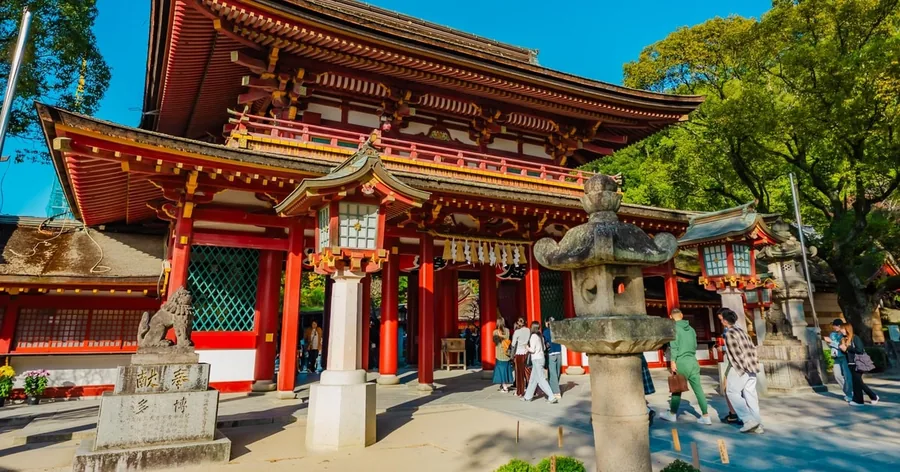
Kushida Shrine, the heart of old Hakata, and the tall decorated festival float on display in its grounds. Pair it with the covered Kawabata arcade and a bowl of Hakata ramen and you have the city's classic late morning.
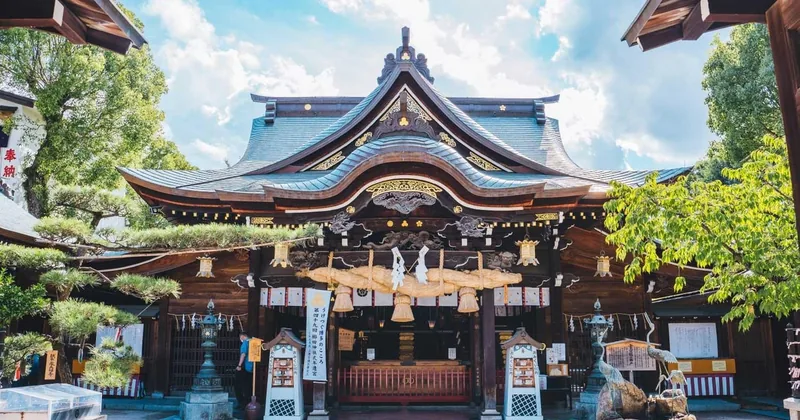
Kushida Shrine is Hakata's guardian shrine and the home of the Hakata Gion Yamakasa festival, held from 1 to 15 July and listed by UNESCO as Intangible Cultural Heritage. A kazari-yamakasa, a decorative float over 10 m tall covered in figures from history and legend, stands in the grounds most of the year (it is replaced in June). Look for the well of the water of longevity and the old ginkgo tree. Across the street, the Hakata Machiya Folk Museum is set in a merchant house from the Meiji era, with displays on the festival and on local crafts, and craftspeople at work on most days.
From the shrine, Canal City Hakata is about five minutes away: a shopping complex around an artificial canal, with regular fountain shows through the day and a floor of ramen shops for lunch. Then walk north through the Kawabata arcade, a covered street of about 400 m that has been Hakata's shopping street for over 130 years, to Nakasu-Kawabata Station. What to order at the ramen counter is in what to eat in Fukuoka.
Three unhurried hours with a private host through Shofukuji, Tochoji, Kushida Shrine and the Kawabata arcade, starting from your hotel or Hakata Station.
Check dates for the Fukuoka Essentials walkOhori Park and the castle ruins, or Momochi and Fukuoka Tower?
Choose Ohori Park and the castle ruins for a green, easy afternoon walk, or Momochi and Fukuoka Tower for the sea and a view over the city. With good energy and an early start, you can do the park first and the tower at sunset.
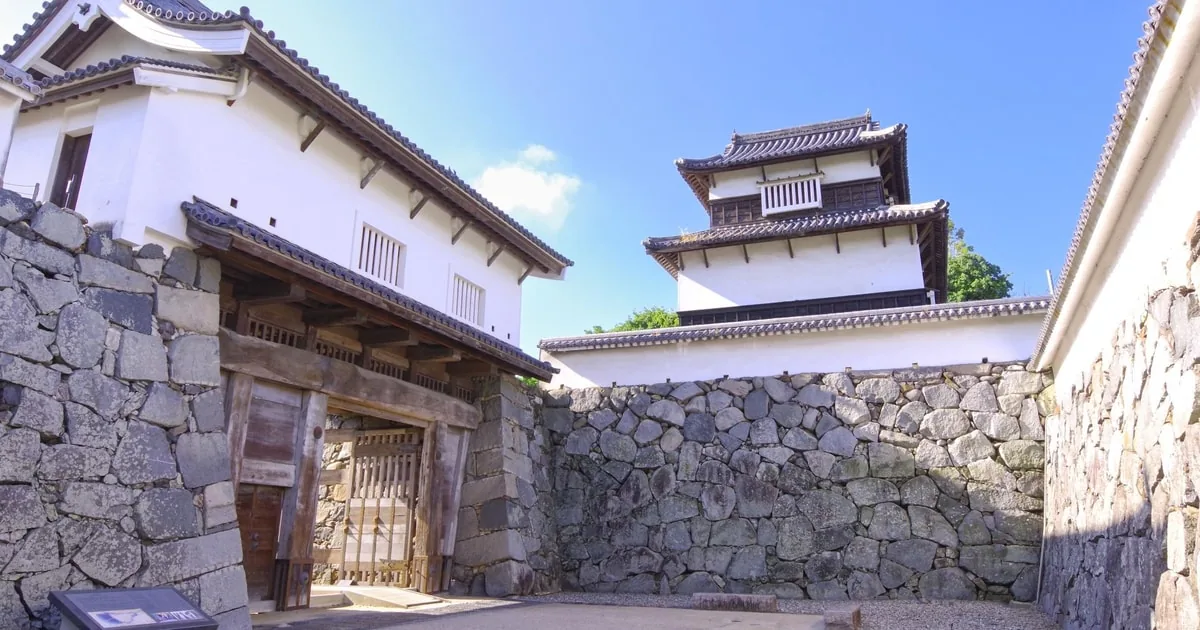
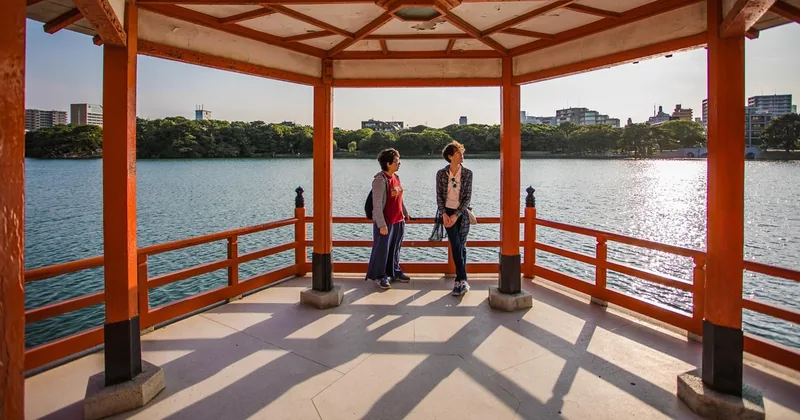
Ohori Park was built between 1926 and 1929 from part of the old castle moat, and its path runs about 2 km around the lake, crossing to small islands by bridges. The Japanese garden sits at the southern end, and the Fukuoka Castle ruins rise right beside the park. The castle was built from 1601 by the lord Kuroda Nagamasa; today you climb among massive stone walls, gates and turrets. The castle ruins are a park open to everyone, and the Shiomi turret, rebuilt with original timbers, reopened in 2025 (its first floor is usually open 10:00 to 16:00, closed Mondays). In late March the ruins are one of the city's favourite places for cherry blossom.
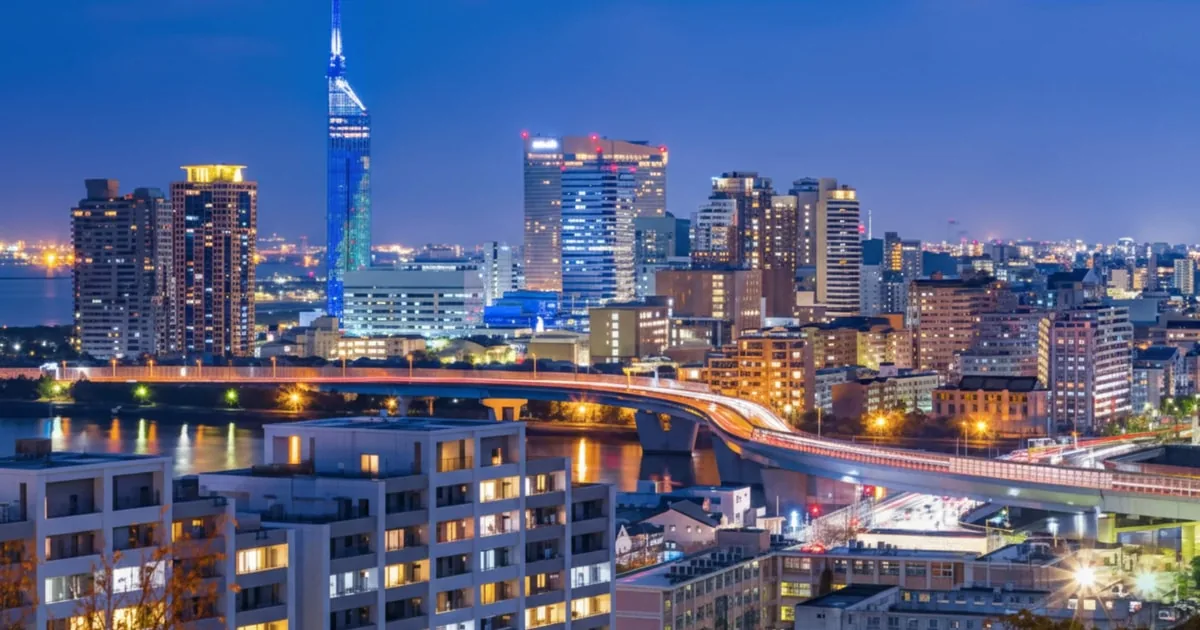
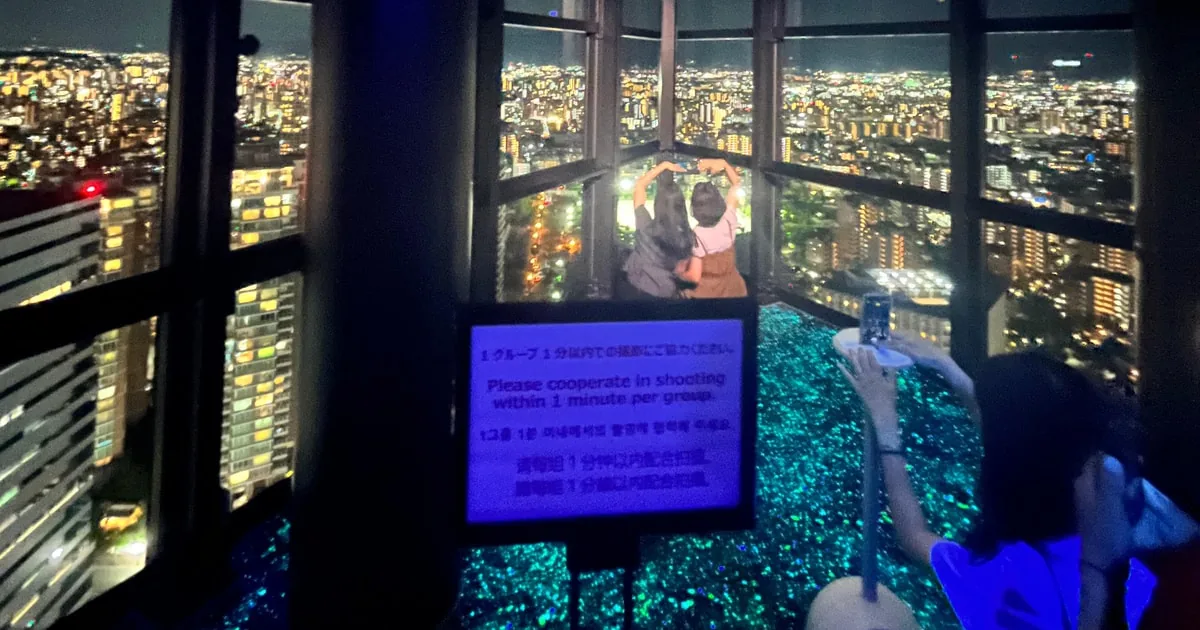
Momochi is the waterfront to the north-west. Fukuoka Tower, 234 m tall and opened in 1989 for the city's centenary, has an observation deck at 123 m with views over Hakata Bay and the whole city. Below it, Momochi Seaside Park has an artificial sand beach, a good place to watch the sun go down. It is about 20 minutes on foot from Tojinmachi Station, or you can take a Nishitetsu bus from Tenjin or Hakata.
How do you end the day at the yatai?
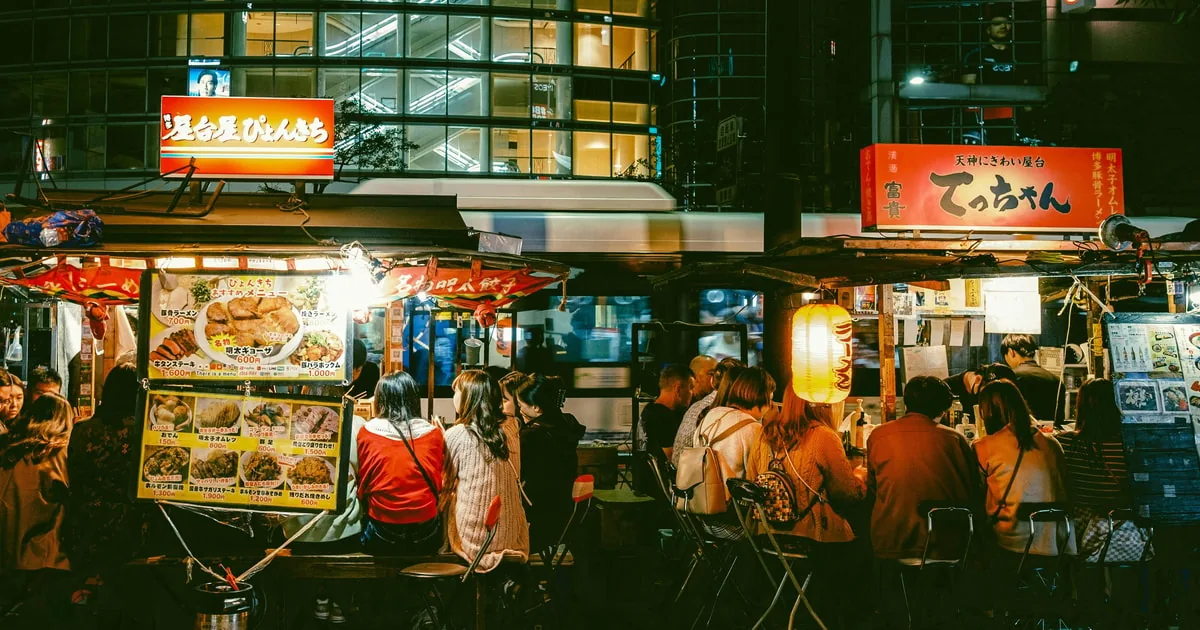
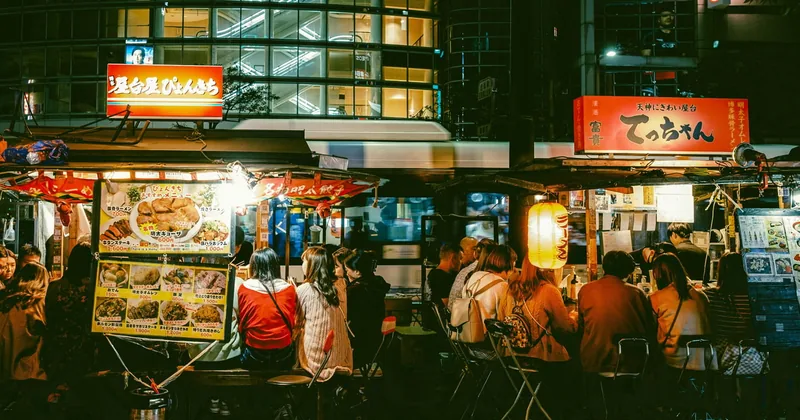
Head to Nakasu or Tenjin from about 6 pm, when the stalls light up. Pick one with an empty seat, order a drink and a dish or two, and move on to a second stall after a while.
Fukuoka has around 100 yatai, small open-air food stalls that are set up every evening and packed away before morning. The best-known row lines the Naka River on the Nakasu side, a few minutes from Nakasu-Kawabata Station; others cluster in Tenjin and near Nagahama. Each stall has a counter, a curtain and a handful of seats. Ask at the curtain how many seats there are, start with a drink and something quick like oden while grilled dishes cook, and make room for the next guests when you have eaten. Many stalls take cards or QR payments, but carry some cash.
On rainy or stormy nights many stalls stay closed, and each rests on its own day of the week, so do not count on a particular stall. A guided first evening removes the guesswork about menus that are often only in Japanese. Dishes, etiquette and the other food tours are in what to eat in Fukuoka.
Your first yatai night with a guide who orders for you: two or three stalls, a food and drink allowance at each, and an indoor alternative on heavy rain nights.
Check dates for the Nakasu yatai night tourWhat not to miss in Fukuoka?
The details that make a day here memorable: the quiet grounds of Shofukuji, the festival float at Kushida Shrine, a kaedama refill at the ramen counter, the stone walls of the castle, the city lights from Fukuoka Tower and a seat at a yatai.
- A second serving of noodles: in Hakata you choose how firm your ramen noodles are and ask for kaedama, a fresh refill, when you finish the first serving.
- The festival float: even outside July, the Kushida float shows what the Yamakasa festival is about.
- Hakata's riverside at night: walk along the Naka River in Nakasu after dark, with the neon of the nightlife district on the water and the stalls along the bank.
- A view from above: Fukuoka Tower at dusk, or the rooftop of Hakata Station, where many visitors head for a look over the city.
- The garden of ACROS Fukuoka: in Tenjin, a green, terraced building facade you can climb on foot, with the rooftop open on weekends and holidays.
And some things to skip: do not try to fit Dazaifu into the same day unless you drop the afternoon, and do not plan around a hop-on hop-off bus; Fukuoka does not have that kind of network. The quieter corners are in Fukuoka hidden gems.
What if it rains, or you arrive by cruise ship?
On a rainy day, keep the temples short and move indoors: Canal City, the Tenjin underground mall, the Hakata Machiya Folk Museum and the Fukuoka Asian Art Museum. On a cruise-ship day, do old Hakata and lunch, then one afternoon stop, and leave a good margin before all aboard.
Rain: Fukuoka's centre is well sheltered. The Kawabata arcade is covered, Canal City keeps you dry from the fountain show to lunch, and the Tenjin underground mall, opened in 1976, runs for about 590 m with about 150 shops under the main street. The Hakata Machiya Folk Museum and the Fukuoka Asian Art Museum in Hakata Riverain (closed Wednesdays) fill the afternoon. Many yatai do not open in heavy rain; head for an izakaya or a ramen shop instead. Rainy months and typhoon season are covered in the best time to visit.
Cruise ships dock at the Chuo Pier terminal or Hakata Port, beside Bayside Place Hakata, a short bus or taxi ride from Hakata Station and Tenjin. With a morning arrival and an evening departure, walk the temple quarter and Kushida Shrine, have lunch at Canal City, then choose either Ohori Park or Fukuoka Tower, not both. The yatai open at around the time most ships leave, so a ramen lunch is your taste of Hakata food.
Should you book a guide for one day in Fukuoka?
You do not need one: the route above is easy on your own. A guide is worth it if you want the stories behind the temples and the shrine, if you are travelling with family and want someone to set the pace, or if you want your first yatai night without the language barrier.
The city tours in Fukuoka are small, mostly private walks, with tens of reviews rather than hundreds. That is not a warning sign: it reflects a compact city where most visitors explore on their own. For a morning in old Hakata, the Fukuoka Essentials walk (4.9 from 48 reviews) is private and meets at your hotel or Hakata Station, and one reviewer said the temple gardens would have taken them days of trial and error to find alone. The Sacred Path walk (4.9 from 21) covers four temples and shrines in a small group in English or German, with the Canal City fountain show; a reviewer's tip is to be prepared for a long walk. For the evening, the Nakasu yatai night tour (4.8 from 74) is the most-reviewed tour inside the city.
A private walk costs more than a small-group one, but the route and the pace are yours. All the city tours are compared side by side on the homepage, including the option of going on your own.
The private walk starts with a short questionnaire after booking, and the guide builds a two- to four-hour route around it: food, history, art or neighbourhoods, with a start time that suits you. Reviewers mention covering a lot of ground in one day, the view from the top of Hakata Station and Kushida Shrine at night. Transport, food and tickets are extra.
Explore the private Fukuoka walkFrequently asked questions
Is one day enough in Fukuoka?
For the main sights of the city, yes: old Hakata, Kushida Shrine, Ohori Park and a yatai evening fit into one well-planned day. Two days let you add Tenjin and the waterfront without hurrying, and a third is for a day trip. See Fukuoka in three days.
Can I see Fukuoka on a long layover?
Often, yes. Fukuoka Airport is one of the most central in Japan: the subway reaches Hakata Station in about five minutes and Tenjin in about ten. The international terminal is not on the subway, so take the shuttle bus to the domestic terminal first. With five or six hours between flights, the temples of old Hakata and Kushida Shrine are realistic.
Do I need a day pass for one day in Fukuoka?
Not necessarily. The route above uses the subway only two or three times, and the rest is on foot. A Subway 1 Day Pass covers all three lines; it pays off if you add more rides, for example to Fukuoka Tower and back. An IC card such as Hayakaken or Suica is the simplest option.
Is Fukuoka safe to walk in the evening?
Yes. Fukuoka is compact, well lit and easy to explore on foot and by subway, day and evening. The yatai areas in Nakasu and Tenjin are busy and relaxed after dark.
Ready to book
Choose your tour
Check your date and the live price on GetYourGuide; the refund terms are shown on each option.
Fukuoka Essentials: Hakata Walking Tour
- A private walk with a local host, just your group
- Shofukuji, Tochoji, Kushida Shrine and the Kawabata arcade
- Meet at your central hotel or at Hakata Station
Nakasu Yatai Food Stall Night Tour
- A private guide for your group, in English
- Visits to two or three yatai food stalls
- A food and drink allowance at each stall
Sacred Path: Hakata Temples & Shrines
- A three-hour guided walk in a small group
- Shofukuji, Tochoji, Kushida Shrine and Sumiyoshi Shrine
- A stop for the Canal City fountain show