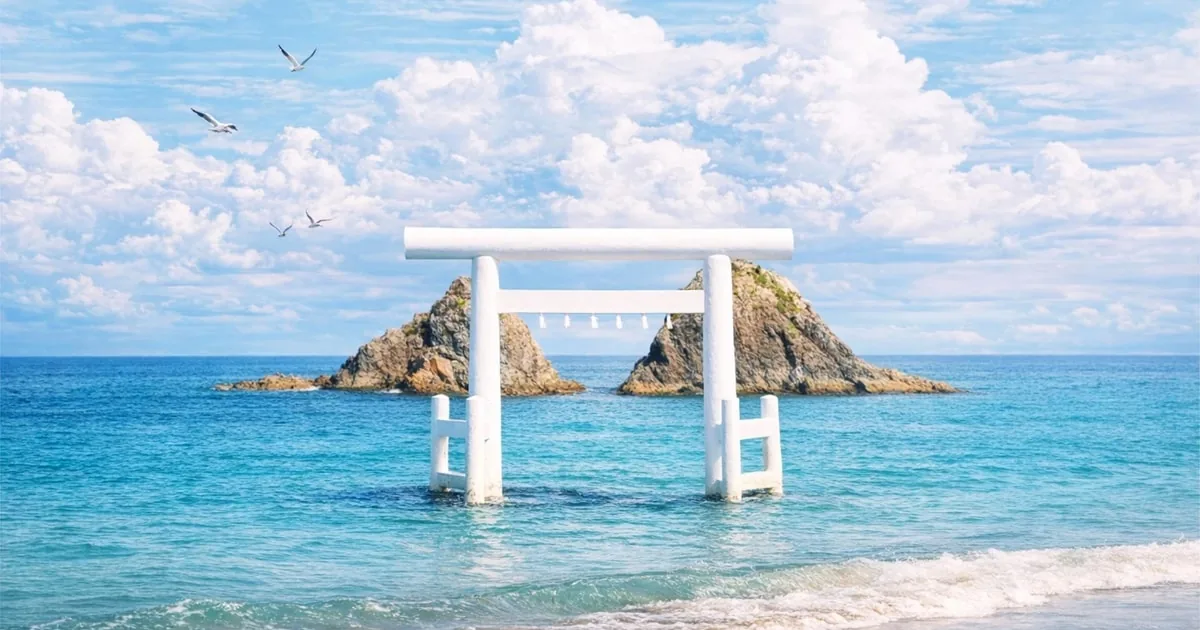
Booking choice: The Sacred Path temples walk, ★ 4.9 (21). Check dates Compare the options below
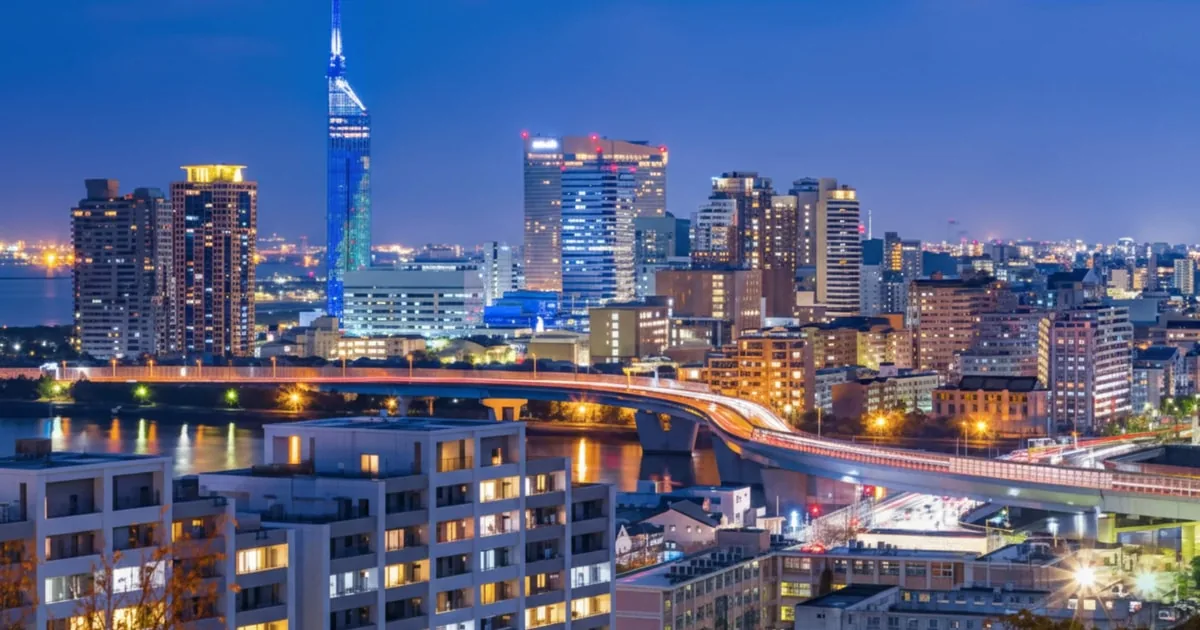
Fukuoka has two centres, and first-time visitors often do not realise it until they look at a hotel map. Hakata, east of the Naka River, grew as a merchant port and today holds the main railway station and the old temple district. Tenjin, west of the river, was part of the castle town of the Kuroda lords and is now the busiest shopping area in Kyushu. The two towns merged as one city in 1889, and the island of Nakasu sits between them, with the river, the nightlife and the best-known row of yatai food stalls.
This guide compares the two for where to stay, then looks at Nakasu, shopping and eating in each district, with a side-by-side table at the end. If you are still deciding how long to stay, read Fukuoka in three days; for a single day on foot, the one-day route.
The quick answer
For a first visit, Hakata is the easier base: Hakata Station has the shinkansen, JR Kyushu trains and the bus terminal, the airport is about five minutes away by subway, and the temples of old Hakata and Kushida Shrine are within a 15-minute walk. Tenjin is the better base for shopping, cafes, bars and yatai, for Nishitetsu trains to Dazaifu and Yanagawa, and for Ohori Park and the castle ruins, two subway stops away. The two centres are three stops apart on the Airport Line, about five minutes, and Nakasu sits between them. Fukuoka is also good for shopping: department stores and an underground mall in Tenjin, AMU Plaza and Hakata Hankyu at Hakata Station, Canal City Hakata in between, and crafts and snacks in the Kawabata arcade.
Which is better, Hakata or Tenjin?
Neither is better overall; they suit different trips. Hakata wins on transport and history, Tenjin on shopping, food and evenings, and the subway links them in about five minutes.
Ask yourself two questions. First, how will you arrive and leave? If you come by shinkansen from Osaka or Hiroshima, or plan day trips by JR train to Beppu, Kumamoto or Nagasaki, a hotel near Hakata Station saves you a transfer with luggage every time. Second, what will you do in the evenings? If you want to browse shops until late, try small bars and eat at the yatai several nights in a row, Tenjin puts all of that a short walk from your bed.
For a short first visit, most travellers are happiest in Hakata, because the classic sights of old Hakata start about ten minutes from the station. For a longer stay, a second trip or a trip built around food and shopping, Tenjin is the livelier choice. If you cannot decide, look near Nakasu-Kawabata or Gion stations, which sit between the two.
How far apart are Hakata and Tenjin?
About five minutes by subway: Tenjin is three stops from Hakata on the Airport Line, via Gion and Nakasu-Kawabata. On foot it takes about half an hour, through Canal City and Nakasu.
Fukuoka is one of the most compact big cities in Japan, and that shapes the whole decision. The Airport Line runs from Fukuoka Airport through Hakata, Gion, Nakasu-Kawabata and Tenjin to Ohori Park and beyond, so most of what you want to see is on one line. From the airport's domestic terminal, the subway reaches Hakata Station in about five minutes and Tenjin in about ten; from the international terminal, take the shuttle bus to the domestic terminal first.
- Subway: the simplest link. IC cards such as Hayakaken, SUGOCA, nimoca and Suica all work, and a subway day pass covers all three lines.
- Bus: Nishitetsu buses run constantly between Hakata Station and Tenjin inside a flat-fare zone, a good option with shopping bags.
- On foot: Hakata Station to Canal City is about 15 minutes, and Nakasu to Tenjin about 10. The walk takes you across the river and past the yatai at dusk.
Why stay in Hakata?
Because it is the transport hub and the historic heart. Trains, the airport subway and long-distance buses all leave from Hakata Station, and Shofukuji, Tochoji and Kushida Shrine are an easy walk away.
Hakata Station is more than a station: the shinkansen and JR Kyushu lines stop here, the bus terminal next door sends buses across Kyushu, and the station building itself holds department stores and several floors of restaurants. If you are catching an early train to Kagoshima or a late one back to Osaka, staying close saves real time.
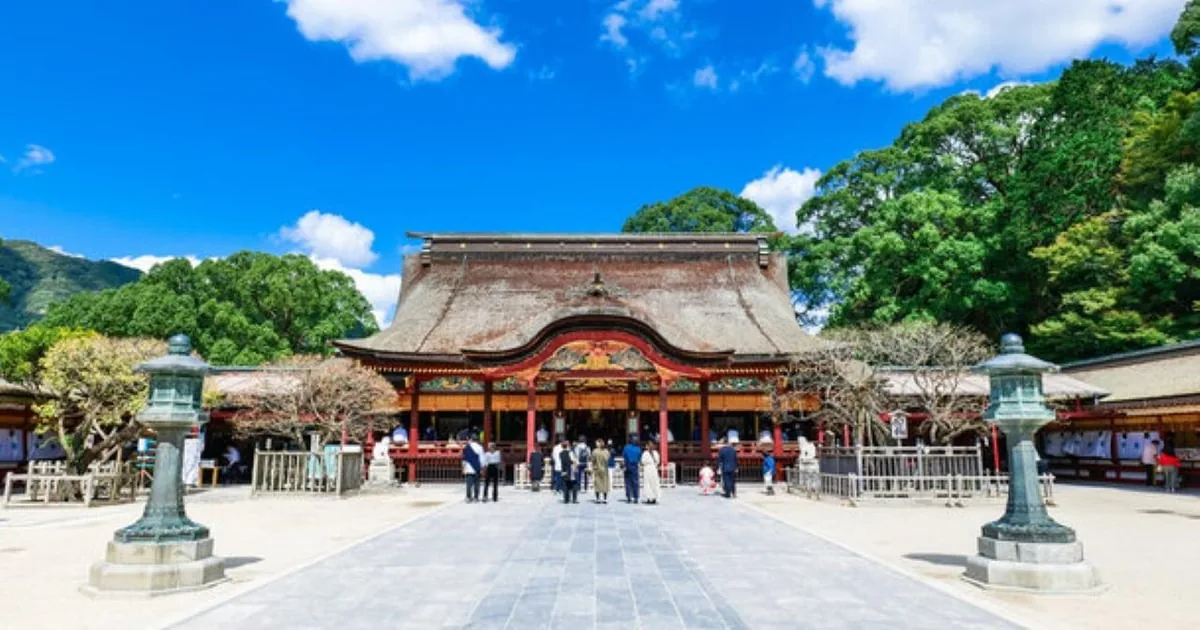
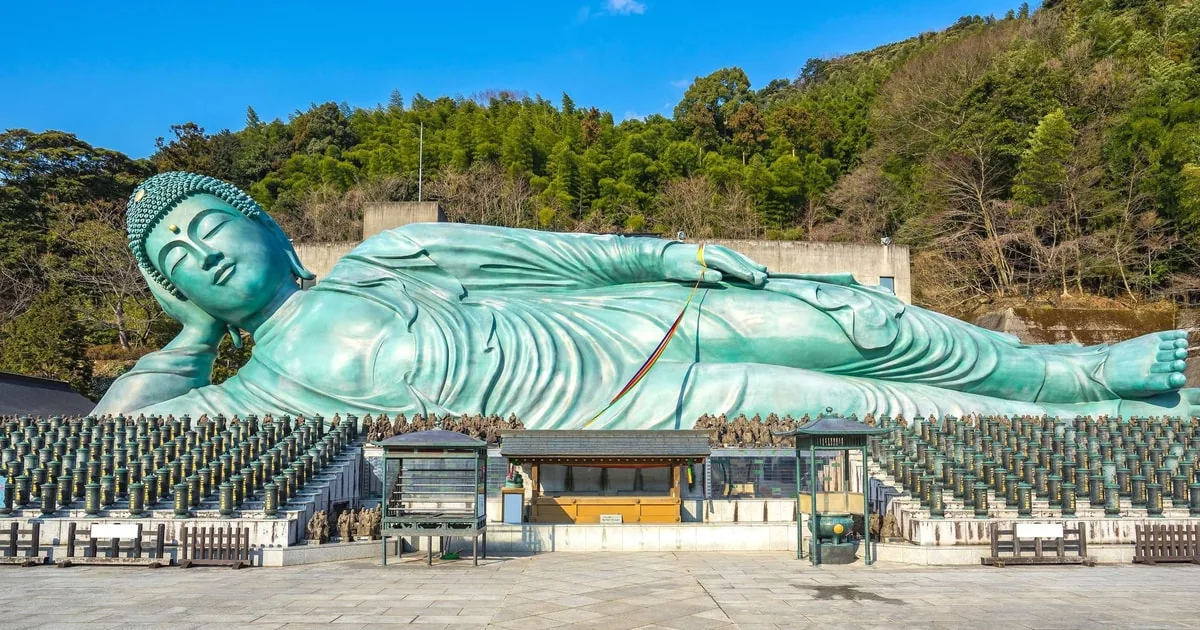
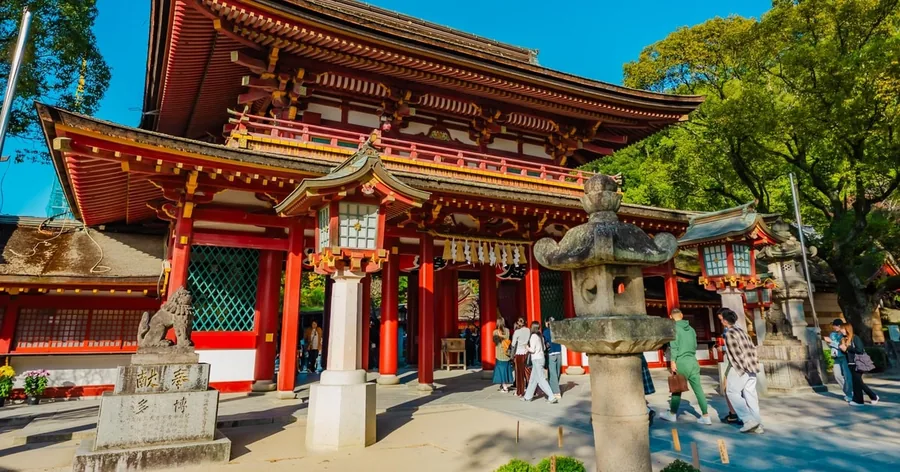
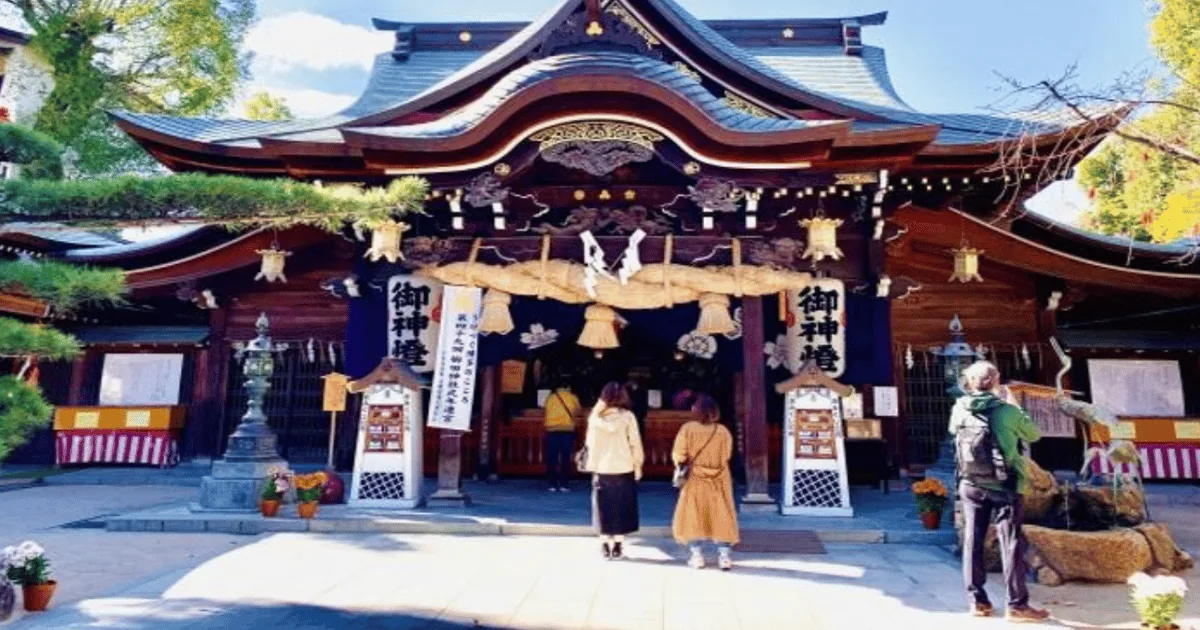
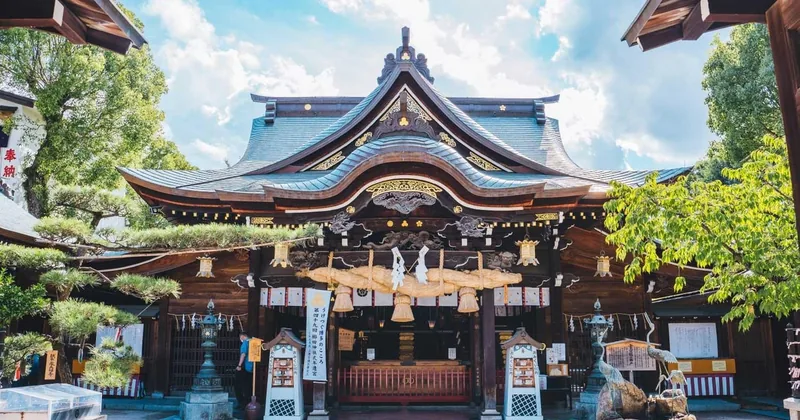
Walk ten minutes north-west and the office blocks give way to the old merchant town. Shofukuji, founded in 1195 and described as Japan's first Zen temple, Tochoji with its red pagoda and great wooden Buddha, and Kushida Shrine with its towering festival float are all within about fifteen minutes on foot of each other. In the morning the lanes are quiet, and you can visit before breakfast. Hakata suits first-time visitors, rail travellers, families who want short walks, and anyone planning day trips; the main downside is that evenings around the station are calmer than in Tenjin.
Start where you stay: the small-group Sacred Path walk meets at Hakata Station and covers Shofukuji, Tochoji, Kushida and Sumiyoshi Shrine in three hours.
Check dates for the Sacred Path temples walkWhy stay in Tenjin?
For shopping, cafes and nightlife, for the widest choice of restaurants, and for easy trips to Ohori Park, the castle ruins, Dazaifu and Yanagawa.
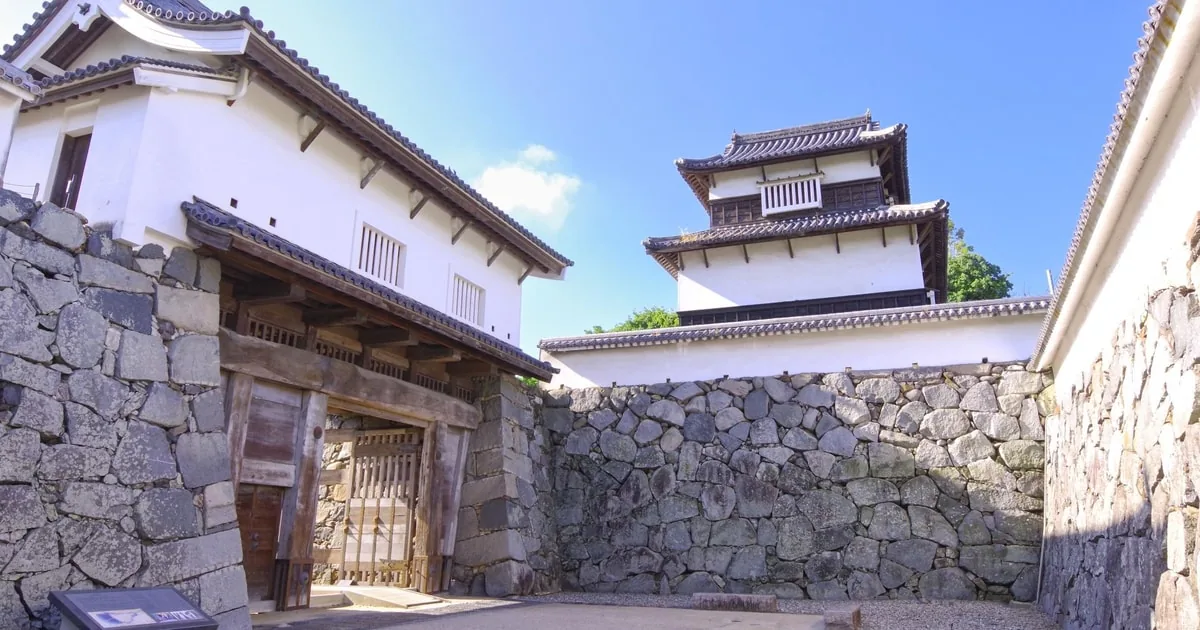
Tenjin is where Fukuoka shops, eats out and goes out. Department stores, fashion buildings and the Tenjin underground mall sit around the main crossroads, and the side streets of Daimyo and Imaizumi fill with independent boutiques, cafes and small bars. The area is being rebuilt under the city's Tenjin Big Bang project, so you will see new towers such as One Fukuoka Building, which opened in 2025, next to older blocks and some construction.
Tenjin also has good links in the other direction. Nishitetsu Fukuoka (Tenjin) Station is the start of the private railway to Dazaifu and to the canal town of Yanagawa, and Ohori Park and the Fukuoka Castle ruins are two subway stops west. Buses to the Momochi waterfront and Fukuoka Tower leave from here too. Tenjin suits second-time visitors, shoppers, couples and friends who want lively evenings, and anyone planning a Dazaifu or Yanagawa day; the main downside is the transfer to Hakata Station with luggage when you move on by shinkansen.
What is Nakasu, and should you stay there?
Nakasu is the island between the Naka and Hakata rivers, Kyushu's biggest nightlife district and home to the best-known row of riverside yatai. Staying nearby puts you between Hakata and Tenjin, a short walk from both.
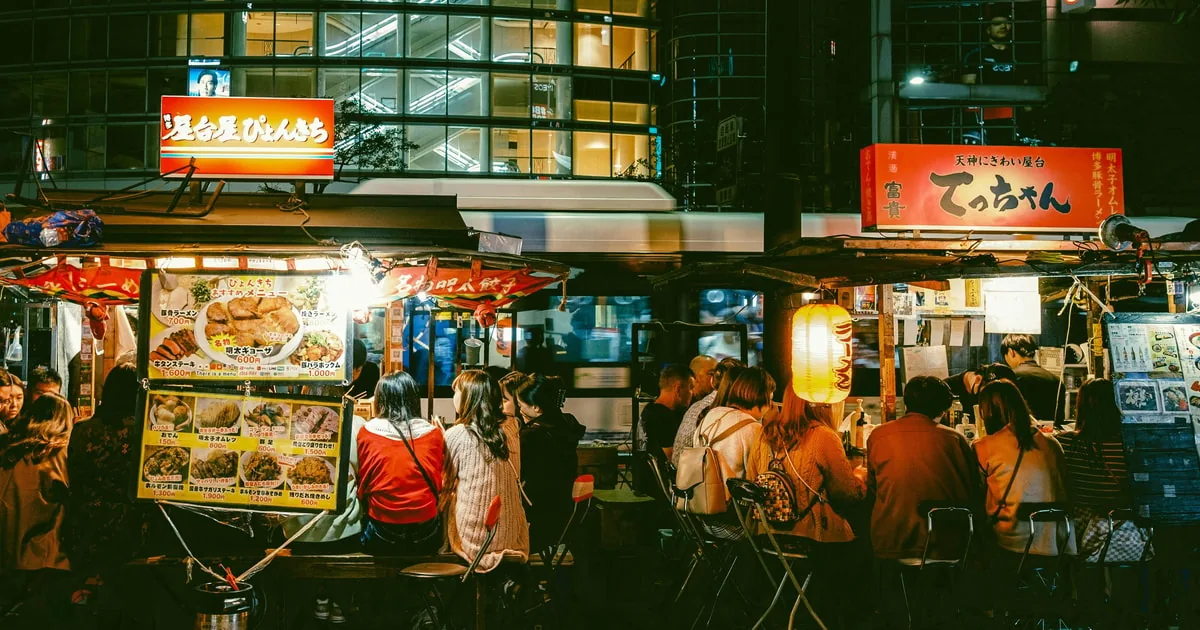
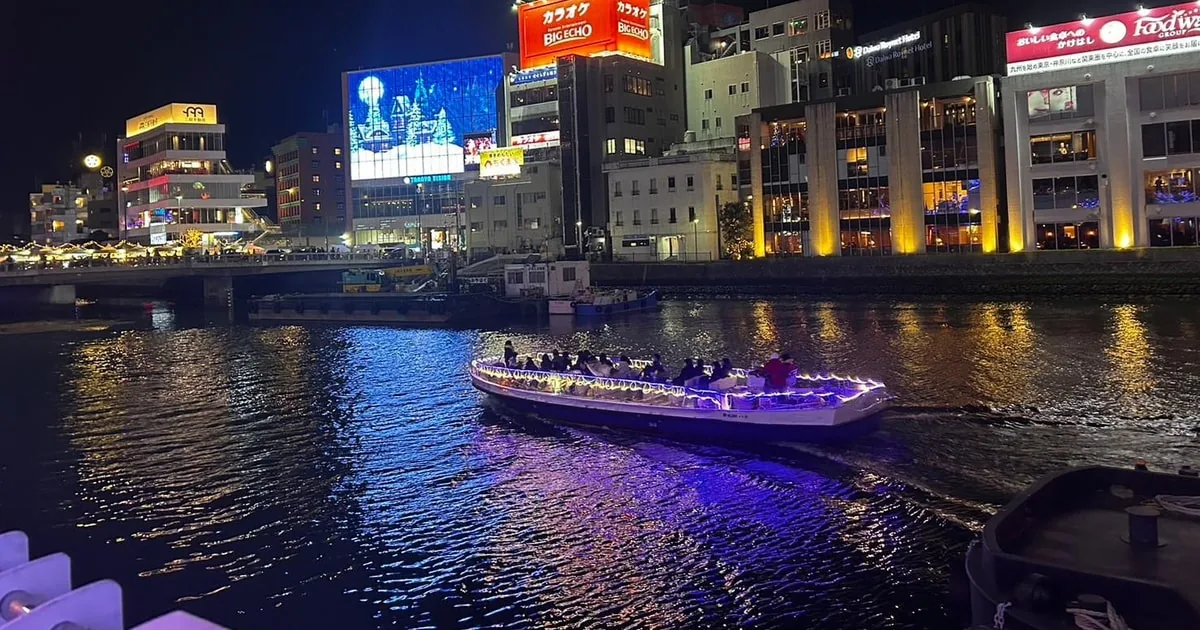
By day Nakasu is quiet; after dark the neon comes on, tour boats light up the river and the yatai along the Naka River open from about 6 pm. The Kawabata arcade, a covered street of about 400 m and around 125 shops, runs from Hakata Riverain down towards Canal City on the Hakata side, so hotels around Nakasu-Kawabata station put the old town, the river and Tenjin all within walking distance. Fukuoka is a safe, easygoing city to walk day and night, Nakasu included, and the riverside is busy and well lit in the evening.
Nakasu is also where most visitors have their first yatai evening. Around 100 stalls open across the city, in Nakasu, Tenjin and Nagahama, each with a handful of seats and a short menu, often in Japanese only. Many take cards or QR payments, but carry some cash, and expect stalls to close on rainy or stormy nights. What to order is in what to eat in Fukuoka.
Built around what you like: a private walk shaped by a short questionnaire, from food and neighbourhoods to history and art, with tips for the rest of your stay.
Check dates for the private Fukuoka walkIs Fukuoka good for shopping?
Yes, and the two centres shop differently. Tenjin has the department stores, fashion buildings and a long underground mall; Hakata has the station malls and Canal City; the Kawabata arcade is best for crafts and snacks.
- Tenjin: the big department stores Iwataya, Daimaru and Mitsukoshi, fashion buildings around the Tenjin crossing, and Tenjin Chikagai, an underground mall of about 590 m with around 150 shops under a 19th-century European-style ceiling. It opened on 10 September 1976, so it turned 50 in September 2026, and it keeps you dry on rainy days.
- Daimyo and Imaizumi: the side streets west and south of Tenjin, with independent fashion, vintage clothes, homeware and coffee shops.
- Hakata Station: AMU Plaza Hakata and the Hakata Hankyu department store in the station building, and KITTE Hakata beside it. The basement food halls are the easiest place to buy boxed sweets and mentaiko before a train.
- Canal City Hakata: about 250 shops and restaurants, a theatre and cinemas around a canal, about 15 minutes on foot from Hakata Station and 20 from Tenjin. The fountain show in the canal plays every half hour, with projections after dark, and anyone can watch.
- Kawabata arcade: Hakata's old merchant street, with shops selling Hakata ori textiles, festival goods and snacks, and the Hakata Machiya Folk Museum a few steps away.
For a souvenir you make yourself, the Hakata doll painting workshop in Nakasu lets you paint a traditional clay doll in about an hour and a half; the teacher speaks Japanese, and the steps are written out in English. What to take home is covered in the food and souvenir guide.
A souvenir you painted yourself: an hour and a half at a doll shop in Nakasu, with written English steps, a sample to follow and tea on the table.
Check dates for the Hakata doll painting workshopWhere do you eat in Hakata and in Tenjin?
Both are excellent. Hakata has ramen counters and the station's restaurant floors, plus hotpot places in the old town; Tenjin has the widest choice of izakaya, yatai and small bars. Nakasu's riverside stalls are a walk from either.
Around Hakata Station you eat well without leaving the building: the upper floors hold dozens of restaurants, and ramen shops line the streets outside. Towards Gion and Kushida Shrine, look for motsunabe (offal hotpot) and mizutaki (chicken hotpot) restaurants in the evening. The old town goes quiet early, so for later dinners head to Nakasu or Tenjin.
Tenjin has more of everything: izakaya in the side streets, yatai along the streets near the department stores, and the bars of Daimyo and Imaizumi. For ramen at its most basic, the Nagahama stalls and shops near the fish market are a short taxi or bus ride north-west of Tenjin. Order your noodle firmness and ask for kaedama, a fresh refill of noodles, when you finish the first serving. Every dish worth trying, and where, is in what to eat in Fukuoka.
How do Hakata and Tenjin compare side by side?
Hakata is the station, the old town and the easy base for trains; Tenjin is shopping, food and evenings, with Ohori Park and the private railway to Dazaifu nearby. The table sums it up.
Whichever you pick, you will spend time in both, so choose the base that saves you the most trips with luggage and the most late walks home. A guided walk through old Hakata starts at Hakata Station or your hotel either way: the Sacred Path temples walk in a small group, or a private walk built around you if you would rather set the pace.
| Hakata | Tenjin | |
|---|---|---|
| Best for | First visits, rail travellers, day trips, early starts | Shopping, food, nightlife, longer stays |
| Getting there | Shinkansen, JR Kyushu, bus terminal; airport about 5 minutes by subway | Subway about 5 minutes from Hakata; airport about 10 minutes |
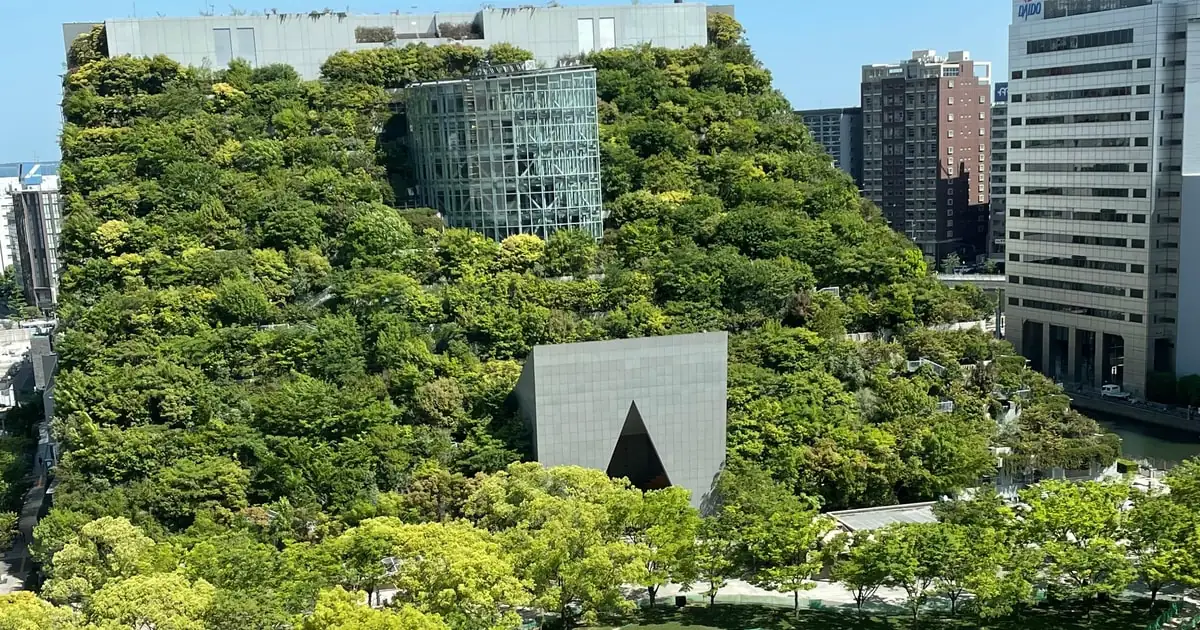
| Sights on foot | Shofukuji, Tochoji, Kushida Shrine, Kawabata arcade, Canal City | ACROS step garden, Daimyo side streets; Ohori Park and the castle ruins two stops west |
| Shopping | AMU Plaza, Hakata Hankyu, KITTE Hakata, Canal City | Department stores, Tenjin underground mall, Daimyo and Imaizumi |
| Evenings | Calmer; ramen and hotpot near the station | Lively; izakaya, bars and yatai, Nakasu close by |
| Day trips | JR trains across Kyushu, buses from the terminal | Nishitetsu trains to Dazaifu and Yanagawa |
Three hours, four great temples and shrines, a leisurely pace and tips for the rest of your stay: the Sacred Path walk from Hakata Station.
Check dates for the Sacred Path temples walkFrequently asked questions
Is Hakata Station the same as Fukuoka Station?
Yes and no. Fukuoka's main railway station is called Hakata Station: when the two towns merged in 1889, the city took the name Fukuoka but the station kept the name Hakata. Tenjin's private railway terminal is called Nishitetsu Fukuoka (Tenjin) Station, which is where trains to Dazaifu and Yanagawa start.
Can you walk from Hakata to Tenjin?
Yes. It takes about half an hour at an easy pace, via Canal City, the Kawabata arcade or Nakasu and the bridges over the Naka River. Most visitors walk one way and take the subway, about five minutes, the other.
Is Nakasu a good area for families?
It can be. Fukuoka is a safe, easygoing city to walk day and night, and the riverside around Nakasu is busy and well lit in the evening. Families who want quiet nights and short walks to the sights often prefer Hakata, near the station and the temples, or the streets around Gion.
Where should you stay for Dazaifu?
Tenjin, if Dazaifu is your main day trip: Nishitetsu trains leave from Tenjin and reach the shrine in about 30 minutes with one change. From Hakata, a direct bus takes about 40 minutes. Both work well for a half-day visit.
Ready to book
Choose your tour
Check your date and the live price on GetYourGuide; the refund terms are shown on each option.
Sacred Path: Hakata Temples & Shrines
- A three-hour guided walk in a small group
- Shofukuji, Tochoji, Kushida Shrine and Sumiyoshi Shrine
- A stop for the Canal City fountain show
Private Fukuoka Walk, Built Around You
A short questionnaire first, then a route for food, history, art or neighbourhoods

Hakata Doll Painting Workshop
Paint your own Hakata doll; the teacher speaks Japanese, the steps are in English